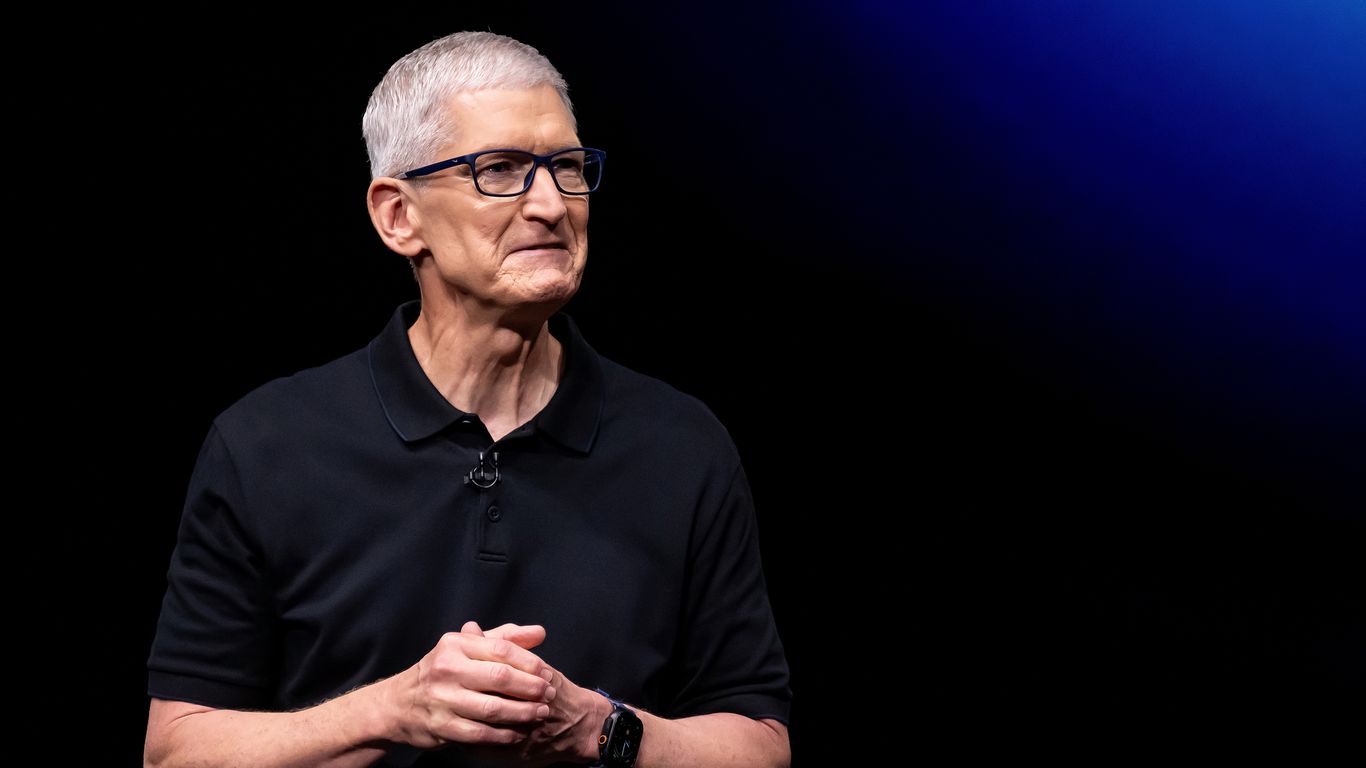
Tim Cook Steps Down: Apple CEO Transition to John Ternus
Apple Inc. announced today that CEO Tim Cook is stepping down after nearly 15 years of leadership, marking the end of an era for the world's most valuable technology company. Cook will transition to executive chairman on September 1, 2026, while senior vice president of hardware engineering John Ternus assumes the chief executive role.
The leadership transition comes as Apple continues to evolve from its roots as a computer manufacturer into a comprehensive technology ecosystem spanning hardware, software, and services. Under Cook's stewardship since 2011, Apple has launched groundbreaking products including the Apple Watch and AirPods while maintaining its position at the forefront of consumer technology innovation.
Tim Cook's Transformative 15-Year Legacy at Apple
When Tim Cook stepped into the CEO role in August 2011, he faced the monumental challenge of succeeding Apple co-founder Steve Jobs. Over his nearly 15-year tenure, Cook has proven that Apple could thrive beyond its legendary founder while staying true to its core values of innovation and design excellence.
Cook's leadership philosophy differed markedly from his predecessor's approach. Where Jobs was known for his mercurial temperament and hands-on product development, Cook brought operational expertise and a more collaborative management style. This transition proved crucial in scaling Apple's operations to meet unprecedented global demand while expanding into new product categories.
Under Cook's guidance, Apple's market capitalization soared from approximately $350 billion in 2011 to over $3 trillion today, making it the world's most valuable publicly traded company. This growth was driven not just by iPhone sales, but by Cook's strategic vision to diversify Apple's revenue streams through services, wearables, and emerging technologies.
The Apple Watch, launched in 2015, exemplifies Cook's product leadership. Initially met with skepticism, the device has become the world's best-selling smartwatch and opened entirely new markets for Apple in health monitoring and fitness tracking. Similarly, AirPods transformed Apple's approach to audio accessories and helped popularize the true wireless earbuds category that competitors continue to chase.
Cook also oversaw Apple's expansion into services, including the App Store, Apple Music, iCloud, and Apple TV+. These recurring revenue streams now generate over $80 billion annually, providing stability beyond hardware sales cycles and demonstrating Cook's understanding of evolving consumer technology consumption patterns.
John Ternus: Apple's New Hardware-Focused Leadership
John Ternus brings deep technical expertise and institutional knowledge to the CEO role. As senior vice president of hardware engineering since 2013, Ternus has been instrumental in developing many of Apple's most successful products over the past decade. His promotion signals Apple's continued commitment to hardware innovation as the foundation of its ecosystem strategy.
Ternus joined Apple in 2001 and has worked across multiple product lines, including the original iPad, iPhone, and Mac computers. His technical background contrasts with Cook's operations-focused expertise, potentially indicating a shift toward more hands-on product development leadership reminiscent of Apple's earlier days under Steve Jobs.
Industry analysts view Ternus's appointment favorably, citing his track record in shipping complex hardware products on schedule while maintaining Apple's exacting quality standards. His experience managing global supply chains and manufacturing partnerships will be crucial as Apple navigates ongoing geopolitical tensions affecting technology companies operating internationally.
The transition to Ternus also reflects Apple's current strategic priorities. With artificial intelligence, augmented reality, and automotive technologies representing key growth areas, having a hardware expert at the helm positions Apple to tackle the engineering challenges these emerging markets present.
Ternus has been notably involved in Apple's rumored augmented reality headset development and the company's exploration of autonomous vehicle technologies. His leadership may accelerate these initiatives while maintaining Apple's traditional focus on seamless hardware-software integration.
Industry Impact and Market Implications
Cook's departure reverberates far beyond Apple, given the company's outsized influence on global technology trends and consumer behavior. As the leader of the world's most valuable company, Cook's decisions have shaped everything from smartphone design standards to privacy regulations affecting the entire technology industry.
The timing of this transition occurs during a critical period for the technology sector. Apple faces increasing regulatory scrutiny in multiple jurisdictions over its App Store policies, while competition intensifies from companies like Samsung, Google, and emerging Chinese manufacturers. The new leadership will need to navigate these challenges while maintaining Apple's premium market positioning.
Cook's advocacy for user privacy has become a defining characteristic of Apple's brand identity. His public battles with government agencies over encryption and his criticism of competitors' data collection practices have established Apple as a privacy-focused alternative in an industry often criticized for surveillance capitalism. Ternus will inherit this legacy and the responsibility to maintain Apple's privacy commitment while developing new technologies that require data processing capabilities.
The leadership change also comes as Apple explores new product categories that could define the next decade of consumer technology. The company's long-rumored augmented reality headset, potential automotive ventures, and advanced artificial intelligence capabilities represent billions of dollars in research and development investment that Ternus will now oversee.
Financial markets will closely watch how this transition affects Apple's stock performance and investor confidence. Cook's steady leadership through multiple economic cycles, including the 2020 pandemic and various geopolitical tensions, has made Apple a reliable investment for institutional and retail investors alike.
Expert Analysis: What This Means for Apple's Future
Technology industry experts are analyzing this leadership transition through multiple lenses, considering both the immediate implications and longer-term strategic shifts it might represent. Dan Ives, a senior equity analyst at Wedbush Securities, noted that "Ternus represents continuity with innovation," suggesting that Apple's board chose succession over disruption.
The choice of a hardware expert reflects Apple's continued belief that exceptional products drive ecosystem adoption and customer loyalty. This contrasts with technology companies that have pivoted toward software and services as their primary value proposition. Apple's approach suggests confidence that physical products remain central to consumer technology experiences.
Some industry observers speculate that Ternus's appointment could signal renewed focus on Apple's rumored automotive ambitions. His engineering background and experience with complex manufacturing processes would be valuable assets in developing vehicles that meet Apple's quality standards while competing with established automotive manufacturers and emerging electric vehicle companies.
The transition also raises questions about Apple's organizational culture and management philosophy. Cook's collaborative approach and emphasis on operational excellence may evolve under Ternus's leadership, potentially affecting everything from product development timelines to supplier relationships and employee retention strategies.
Looking Ahead: What to Watch in Apple's Next Chapter
As Apple enters this new leadership era, several key areas will indicate how successfully the company manages this transition. Product development cycles will provide early signals about whether Ternus maintains Apple's reputation for polished, user-friendly devices while potentially accelerating innovation timelines.
The company's approach to emerging technologies like artificial intelligence and augmented reality will be particularly telling. Cook's tenure was marked by careful, deliberate entry into new product categories, prioritizing refinement over being first to market. Ternus may adjust this strategy given his hardware engineering background and the competitive pressures in these rapidly evolving fields.
International expansion and regulatory compliance will test Ternus's leadership skills beyond product development. Apple's business model faces challenges in key markets including China and the European Union, where local regulations and geopolitical tensions create operational complexity requiring diplomatic as well as technical solutions.
The preservation of Apple's premium brand positioning while expanding market reach represents another crucial challenge. Cook successfully maintained Apple's luxury technology image while growing unit sales across multiple product categories. Ternus must balance accessibility with exclusivity as global economic conditions affect consumer spending patterns.
For more tech news, visit our news section.
How Leadership Changes Impact Personal Productivity and Wellness
Apple's leadership transition highlights how technological innovation directly influences our daily productivity and health outcomes. As new leadership shapes Apple's product roadmap, consumers can expect continued evolution in devices and services that support personal optimization goals. The Apple Watch's health monitoring capabilities and iPhone productivity features demonstrate how thoughtful technology design enhances human performance rather than simply adding complexity. Join the Moccet waitlist to stay ahead of the curve.