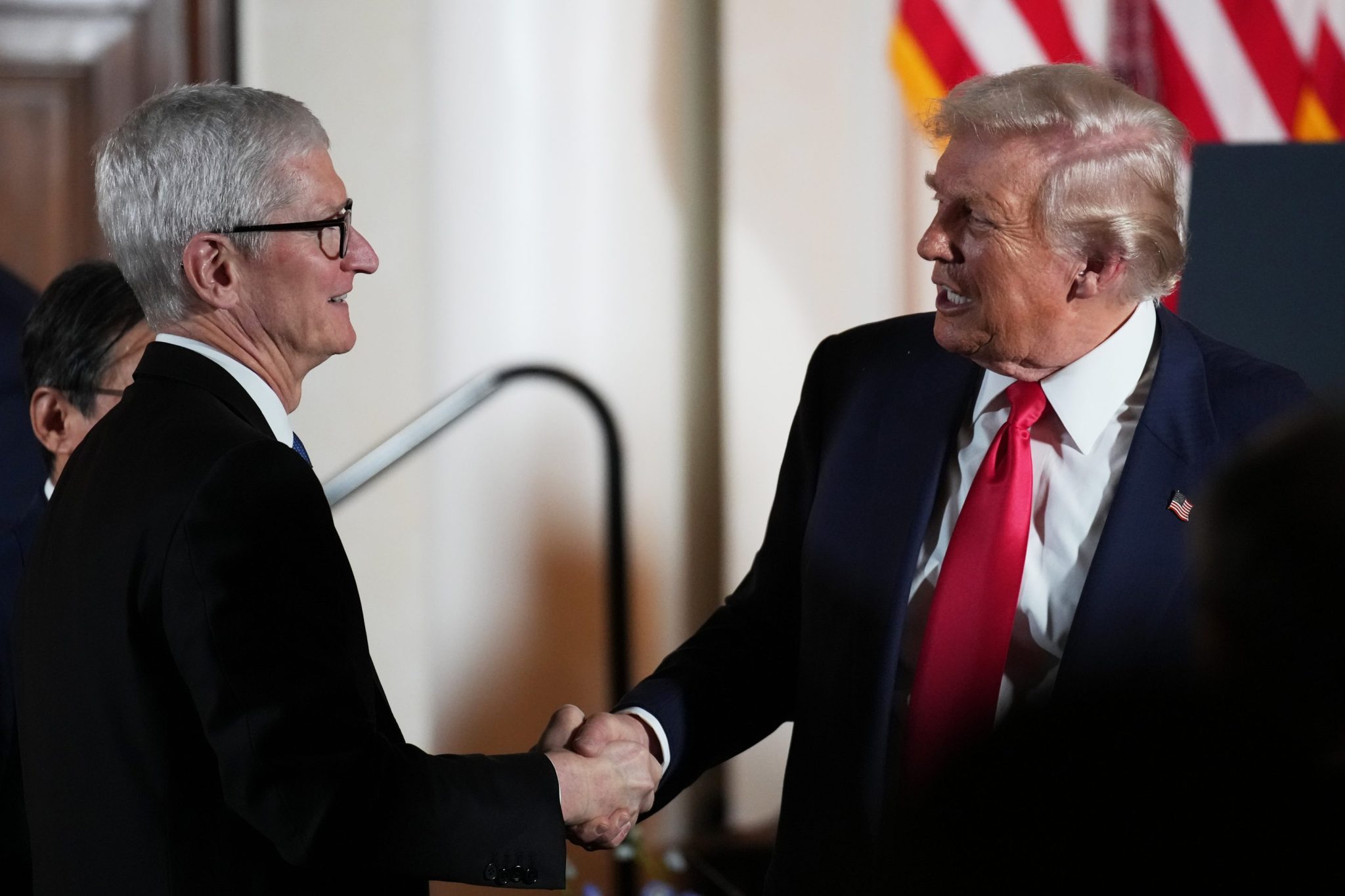
Tim Cook Steps Down as Apple CEO: Tech Leaders React
Tim Cook, the long-serving CEO of Apple Inc., announced his resignation from the world's most valuable technology company, effective September 1, 2026, ending a transformative 15-year tenure that saw Apple's market capitalization soar from $348 billion to over $4 trillion. The announcement sent shockwaves through Silicon Valley and prompted immediate reactions from prominent figures including Warren Buffett, Sam Altman, and former President Donald Trump, who characteristically referred to Cook by his infamous nickname "Tim Apple" in a congratulatory social media post.
Industry Leaders Respond to Tim Cook's Apple Departure
The technology and business communities quickly mobilized to share their thoughts on Cook's unprecedented decision to step down from his role as Apple CEO. The reactions ranged from heartfelt tributes to his operational excellence to speculation about Apple's future direction under new leadership.
Warren Buffett, whose Berkshire Hathaway holds a massive stake in Apple worth approximately $180 billion, praised Cook's stewardship of the company. As one of Apple's largest shareholders, Buffett's perspective carries significant weight with investors who are concerned about leadership transition risks. The Oracle of Omaha has repeatedly called Apple one of Berkshire's "four giants" and has expressed admiration for Cook's ability to build a sustainable competitive advantage around the Apple ecosystem.
OpenAI CEO Sam Altman also weighed in on the departure, likely reflecting on the complex relationship between Apple and artificial intelligence companies. Under Cook's leadership, Apple has taken a more measured approach to AI integration compared to competitors, focusing on privacy-preserving machine learning and on-device processing rather than cloud-based AI services. Altman's comments may signal potential shifts in how Apple approaches AI partnerships and development in the post-Cook era.
Perhaps most memorably, Donald Trump revived his 2019 gaffe by referring to Cook as "Tim Apple" in his congratulatory message. The nickname, which originated from a White House meeting where Trump mistakenly called Cook "Tim Apple" instead of "Tim Cook from Apple," has become a running joke that Cook himself has embraced on social media. Trump's use of the moniker in this context adds a touch of levity to what is otherwise a momentous transition for the technology industry.
The End of the Cook Era: Unprecedented Growth and Transformation
Tim Cook's departure marks the conclusion of one of the most successful CEO tenures in corporate history. When he assumed the role from Apple co-founder Steve Jobs in August 2011, Cook inherited a company known primarily for the iPhone, Mac computers, and the nascent iPad. Under his leadership, Apple evolved into a diversified technology ecosystem encompassing services, wearables, and a growing emphasis on health and wellness technology.
The numbers speak to Cook's operational excellence: Apple's annual revenue grew from $108 billion in fiscal 2011 to an estimated $420 billion in fiscal 2026. More importantly, Cook successfully navigated the company through the challenging transition from a hardware-focused business model to one increasingly driven by services revenue, which now accounts for nearly 30% of total revenue compared to just 12% when he took over.
Cook's tenure was marked by several landmark product launches that expanded Apple's reach beyond traditional computing. The Apple Watch, introduced in 2015, created an entirely new product category and established Apple as a major player in health monitoring technology. The AirPods, launched in 2016, revolutionized wireless audio and contributed to the decline of the traditional headphone jack across the industry. Most recently, Cook oversaw the development and launch of Apple Vision Pro in 2024, positioning the company at the forefront of spatial computing and augmented reality.
Perhaps most significantly, Cook transformed Apple's relationship with health and wellness technology. Under his leadership, the company launched ResearchKit, CareKit, and HealthKit, creating platforms that enable medical research and personal health monitoring. The Apple Watch's ability to detect atrial fibrillation, measure blood oxygen levels, and perform electrocardiograms has potentially saved thousands of lives and established Apple as a credible player in digital health.
Navigating Challenges: Regulation, Competition, and Global Markets
Cook's tenure wasn't without significant challenges. He successfully steered Apple through intense regulatory scrutiny over App Store practices, antitrust investigations in multiple jurisdictions, and complex geopolitical tensions between the United States and China. His diplomatic approach to international relations, particularly with Chinese officials, helped Apple maintain its crucial manufacturing relationships and access to the world's second-largest economy.
The CEO also faced criticism for Apple's perceived lack of revolutionary innovation compared to the Jobs era. While Cook delivered consistent financial results and operational excellence, some investors and analysts argued that the company became too conservative, focusing on incremental improvements rather than breakthrough technologies. However, supporters point to the successful expansion into services, the development of custom silicon chips, and the creation of entirely new product categories as evidence of continued innovation under different leadership style.
Cook's handling of privacy and security issues became a defining aspect of his legacy. His decision to resist FBI demands to create backdoors in iPhone encryption, most notably during the 2016 San Bernardino case, established Apple as a champion of user privacy. This stance resonated with consumers increasingly concerned about data security and helped differentiate Apple from competitors who built business models around data collection and advertising.
Industry Impact and Future Implications
The significance of Cook's departure extends far beyond Apple's corporate boundaries. As the leader of the world's most valuable company, Cook wielded enormous influence over technology trends, supply chain dynamics, and industry standards. His emphasis on environmental sustainability, including Apple's commitment to carbon neutrality and the use of recycled materials, pushed other technology companies to adopt similar initiatives.
Cook's leadership style, characterized by collaborative decision-making and operational discipline, contrasted sharply with the more autocratic approaches of other tech CEOs. His measured public statements and diplomatic approach to controversial issues set a template for corporate leadership in an era of increased scrutiny of Big Tech companies. The transition away from his steady leadership comes at a time when the technology industry faces mounting pressure over market concentration, content moderation, and the societal impact of digital platforms.
The timing of Cook's departure is particularly significant given the current competitive landscape. Apple faces intensifying competition from artificial intelligence companies, regulatory pressure over App Store policies, and the ongoing challenge of maintaining growth in mature markets. The next CEO will inherit a company with strong fundamentals but will need to navigate rapid technological change, particularly in AI and augmented reality, while maintaining Apple's premium market position.
Expert Analysis: What Cook's Departure Means for Apple's Future
Technology analysts and industry experts are closely watching how Apple's board will handle the succession process. Unlike the emergency transition in 2011 when Steve Jobs' illness necessitated quick action, this planned departure gives Apple time to ensure a smooth handover. The company's deep bench of senior executives, including hardware chief John Ternus, services leader Eddy Cue, and software head Craig Federighi, provides several potential internal candidates.
Investment analysts note that Cook's departure removes a known quantity from Apple's leadership equation, potentially introducing volatility into the stock price in the short term. However, the company's strong financial position, loyal customer base, and robust product pipeline should provide stability during the transition period. Berkshire Hathaway's continued investment confidence, as evidenced by Warren Buffett's supportive statements, suggests that major institutional investors view the transition as manageable.
The broader technology industry will be watching to see whether Apple's new leadership takes a different approach to emerging technologies, particularly artificial intelligence and machine learning. Cook's cautious approach to AI integration, while consistent with Apple's privacy-focused brand, has led some observers to suggest that the company has fallen behind competitors in this crucial area. A new CEO might signal a more aggressive push into AI services and partnerships.
What's Next: The Search for Apple's Next Leader
Apple's board of directors faces the monumental task of selecting a successor to one of the most successful CEOs in technology history. The selection process will likely focus on candidates who can maintain Apple's operational excellence while driving innovation in emerging technology categories. Internal candidates bring deep knowledge of Apple's culture and strategic priorities, while external hires might offer fresh perspectives on new market opportunities.
The new CEO will inherit significant challenges, including ongoing antitrust investigations, the need to maintain growth in maturing markets, and pressure to demonstrate leadership in artificial intelligence and augmented reality. However, they will also take control of a company with unprecedented financial resources, a loyal global customer base, and a proven ability to create new product categories that define entire industries.
Investors and technology enthusiasts will be watching closely for signals about Apple's strategic direction under new leadership, particularly regarding artificial intelligence integration, services expansion, and the development of new hardware categories beyond the Vision Pro.
For more tech news, visit our news section.
The Productivity Revolution: Lessons from Apple's Transformation
Tim Cook's departure from Apple offers valuable insights for anyone focused on personal and professional optimization. His transformation of Apple from a hardware company into a comprehensive ecosystem demonstrates the power of systematic thinking and long-term planning. Just as Cook built integrated systems that seamlessly connect devices, services, and experiences, individuals can create personal productivity ecosystems that enhance their health, focus, and performance. The same principles that drove Apple's expansion into health monitoring, environmental awareness, and seamless user experiences can guide personal development strategies. Join the Moccet waitlist to stay ahead of the curve.