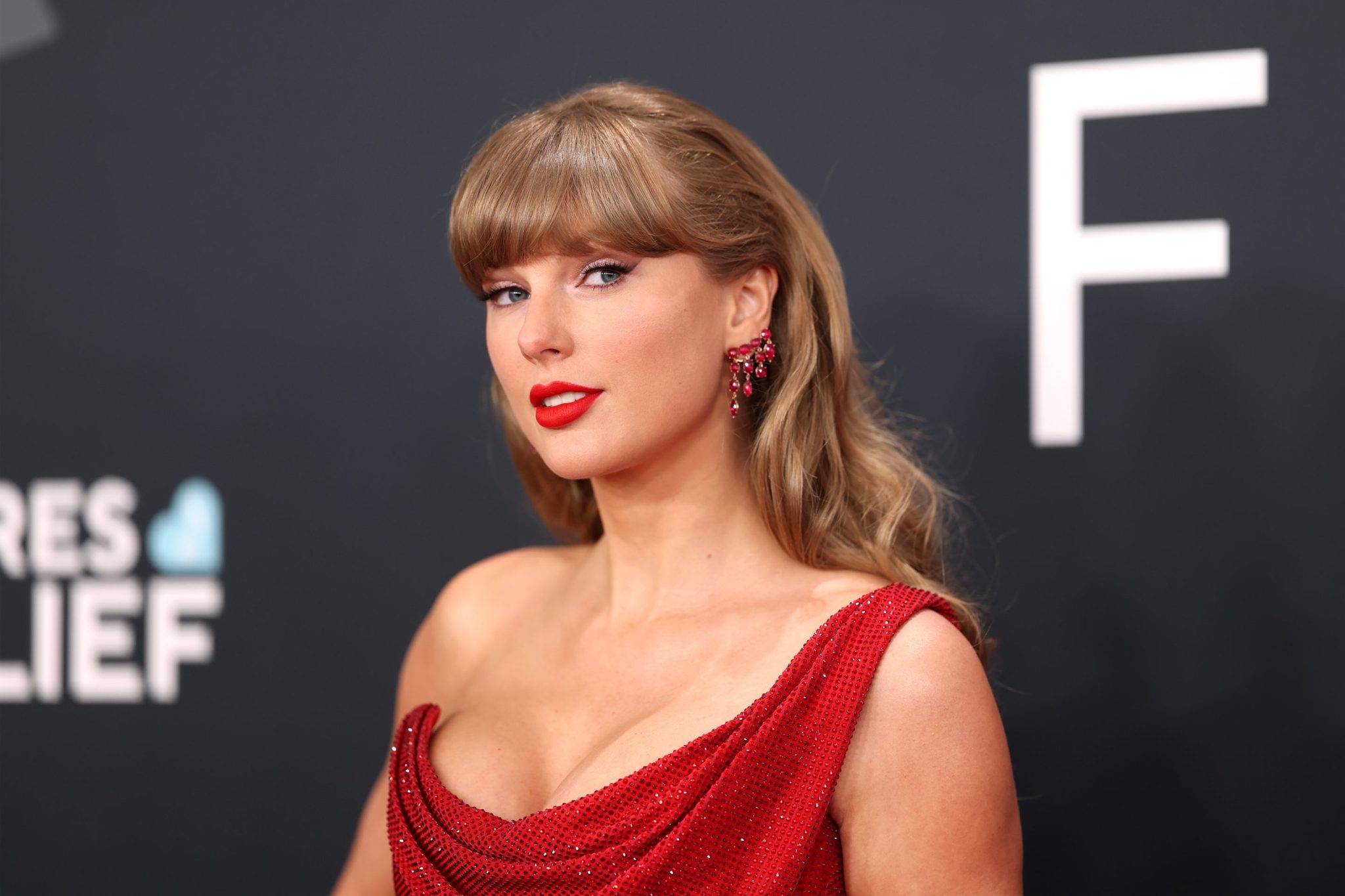
Taylor Swift files to trademark her voice and image to save from potential AI misuse
```json { "title": "Taylor Swift Trademarks Her Voice to Fight AI Misuse", "metaDescription": "Taylor Swift filed three trademark applications on April 24, 2026, to protect her voice and likeness from AI deepfakes and unauthorized use.", "content": "<h2>Taylor Swift Files Trademarks on Her Voice and Image to Combat AI Threats</h2><p>Taylor Swift has taken a significant legal step to protect her identity in the age of artificial intelligence. On April 24, 2026, Swift's company TAS Rights Management filed three trademark applications with the U.S. Patent & Trademark Office — two covering her spoken voice and one covering a specific photograph of her likeness. The filings, first spotted by intellectual property attorney Josh Gerben of Gerben IP, are widely seen as a direct response to the growing threat of AI-generated deepfakes and unauthorized imitations of celebrities' voices and images.</p><h2>What Taylor Swift Actually Filed</h2><p>According to reporting by Variety and CNN, the three trademark applications break down as follows:</p><p>Two of the filings are <strong>sound marks</strong> — a form of trademark protection applied to distinctive audio. One covers the spoken phrase <em>"Hey, it's Taylor Swift"</em> and the other covers <em>"Hey, it's Taylor."</em> Sound marks are not a new concept in trademark law; historically, iconic brand sounds such as MGM's lion roar, NBC's chimes, and the Pillsbury Doughboy's giggle have received this form of protection. However, applying sound marks specifically to a celebrity's spoken voice as a shield against AI misuse is an entirely new application of the law.</p><p>The third filing is a <strong>visual mark</strong> covering a specific photograph of Swift, described in the application as depicting her "holding a pink guitar, with a black strap and wearing a multi-colored iridescent bodysuit with silver boots" while standing on a pink stage, per Variety.</p><p>The trademark applications were filed on behalf of TAS Rights Management, the company that handles Swift's intellectual property portfolio. The attorney of record on the filings is Rebecca Liebowitz, a partner at law firm Venable, according to Variety. These three new applications add to a substantial existing portfolio: Swift has filed more than 300 trademark applications in the United States alone throughout her career, according to CNN, citing intellectual property lawyer Leticia Caminero at the World Intellectual Property Organization.</p><h2>Why AI Makes Trademark Strategy Newly Urgent</h2><p>The core legal problem that Swift's filings are designed to address is a gap that AI technology has opened up in existing intellectual property law. Traditional copyright law protects recorded music and other fixed creative works. But AI tools can now generate entirely new audio or visual content that mimics a person's voice or appearance without directly copying any existing protected recording or image — meaning copyright law may offer little or no recourse.</p><p>Josh Gerben, the intellectual property attorney and founder of Gerben IP who first reported the filings on April 27, 2026, explained the issue clearly. "AI technologies now allow users to generate entirely new content that mimics an artist's voice without copying an existing recording, creating a gap that trademarks may help fill," Gerben wrote in his firm's blog.</p><p>Trademark law operates under a different and potentially broader standard than copyright. As Gerben noted, "Trademark law doesn't just stop identical uses (like copyright law): it stops anything that is confusingly similar to the registered trademark." This distinction matters enormously in the AI context. If Swift successfully registers her spoken voice as a sound mark, she may be able to challenge not only exact reproductions but also AI-generated imitations that a reasonable person might mistake for her — a far wider net than copyright could cast.</p><p>Gerben elaborated: "By registering specific phrases tied to her voice, Swift could potentially challenge not only identical reproductions, but also imitations that are 'confusingly similar,' a key standard in trademark law."</p><h2>Swift's Likeness Has Already Been Misused</h2><p>Swift's decision to act is not hypothetical. Her likeness has already been used without her consent in multiple high-profile AI incidents, according to Variety. These include AI-generated pornographic images that circulated on the internet, unauthorized use of her likeness in Meta's AI chatbots, and — perhaps most publicly — AI-generated images falsely suggesting she had endorsed Donald Trump in the run-up to the 2024 U.S. presidential election, images that Trump himself shared on social media.</p><p>The scale and visibility of these incidents have made Swift one of the most prominent celebrity victims of AI-generated identity misuse, and they provide clear context for why her legal team moved to add this layer of trademark protection.</p><h2>Following a Trail Blazed by Matthew McConaughey</h2><p>Swift is not the first major celebrity to pursue this legal strategy. According to Variety and NBC News, actor Matthew McConaughey became the first A-list Hollywood celebrity to file a series of trademarks — covering images, video, and audio of himself — specifically to protect his likeness against AI-generated deepfakes, filing in January 2026. The U.S. Patent & Trademark Office had already granted McConaughey eight such trademarks in 2025, according to Variety.</p><p>Swift's filings follow that precedent and, given her global profile and the documented incidents of AI misuse targeting her specifically, raise the stakes considerably for how courts and regulators may eventually treat this emerging area of law.</p><h2>A Legal Theory Still Awaiting Its Court Test</h2><p>Despite the strategic logic behind these filings, significant legal uncertainty remains. Gerben was direct about the limits of what is currently known: "Attempting to register a celebrity's spoken voice is a new use of trademark registration that has not been tested in court before."</p><p>His firm's blog also noted that the broader "trademark yourself" approach with respect to AI has not yet been fully stress-tested in federal court, and that a case will need to emerge before the legal theories behind these filings are validated or challenged.</p><p>As Gerben put it: "Ultimately, Taylor Swift and Matthew McConaughey's recent trademark filings are testing new theories on how trademark law will work in the AI age."</p><p>This uncertainty is important context. The filings themselves are not a guarantee of legal protection — they are an attempt to build a legal framework that does not yet have established precedent. If challenged in court, the outcome could either establish a powerful new tool for celebrities and public figures to defend their identities against AI, or it could reveal the limits of applying trademark law to this new class of problem.</p><h2>A Broader Industry Reckoning With AI and Intellectual Property</h2><p>Swift's trademark filings are part of a broader and accelerating reckoning between AI capabilities and existing intellectual property law. In December 2025, Disney sent a cease-and-desist letter to Google, alleging that Google's Gemini AI platform was being used to illegally generate copies of dozens of its trademarked characters, according to Variety. Google pulled down the offending videos by the following day.</p><p>These incidents — from individual celebrities to major entertainment corporations — illustrate that the collision between generative AI and intellectual property rights is not a future concern. It is happening now, and the legal frameworks to address it are still being built in real time, through filings like Swift's and through cases that will eventually test them in court.</p><p>Right of Publicity laws, which exist in many U.S. states, offer some protection against the unauthorized commercial use of a person's name, image, or likeness. But those laws vary significantly by jurisdiction and were not designed with AI-generated content in mind. Trademark law, applied at the federal level, offers a more consistent and potentially more enforceable standard — which is precisely why attorneys like Gerben see it as a meaningful tool, even if an untested one.</p><h2>What Comes Next</h2><p>The immediate next step is procedural: the U.S. Patent & Trademark Office will review Swift's three applications. Trademark registration is not automatic — applications can be challenged or rejected — and the process can take months to years. If the sound marks are granted, any future legal dispute over AI-generated audio that mimics Swift's voice could become the test case that finally puts this legal theory before a federal court.</p><p>The outcome of such a case, if and when it arrives, would likely have implications well beyond Swift herself. A successful defense of a celebrity's AI voice trademark could open the door for other public figures — musicians, actors, broadcasters, athletes — to pursue similar protections. A failed defense could push the debate back to legislators and regulators to close the gap that AI has created in existing law.</p><p>For now, the filings stand as the most high-profile example yet of a celebrity using trademark law as a proactive — rather than reactive — defense against AI misuse of their identity.</p><p>For more tech news, visit our <a href=\"/news\">news section</a>.</p><h2>Why This Matters Beyond Celebrity Law</h2><p>The questions raised by Taylor Swift's trademark filings — who controls your voice, your image, and your identity in an era of generative AI — are not limited to the famous. The legal frameworks being tested by Swift and McConaughey will shape the rules that govern how AI can use anyone's likeness or voice. For professionals, creators, and anyone whose identity is part of their livelihood, understanding how these protections evolve is directly relevant to how they work and protect themselves. Staying informed about the intersection of AI, law, and personal identity is increasingly a matter of professional and personal strategy. <a href=\"/#waitlist\">Join the Moccet waitlist to stay ahead of the curve.</a></p>", "excerpt": "Taylor Swift's company TAS Rights Management filed three trademark applications on April 24, 2026, covering two spoken voice phrases and a specific photograph of her likeness. The filings, described by intellectual property attorney Josh Gerben as 'specifically designed to protect Taylor from threats posed by artificial intelligence,' represent an emerging and legally untested strategy for celebrities seeking to combat AI deepfakes and unauthorized identity misuse. Swift has now filed more than 300 trademark applications in the United States alone.", "keywords": ["Taylor Swift trademark voice AI", "AI deepfakes celebrity protection", "sound marks trademark law", "TAS Rights Management", "intellectual property AI misuse"], "slug": "taylor-swift-trademarks-voice-image-ai-misuse" } ```