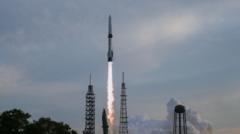
Blue Origin Rocket Grounded After Satellite Launch Mishap
Blue Origin, the aerospace company founded by Amazon billionaire Jeff Bezos, has grounded its rocket operations following a satellite deployment mishap during a recent launch mission. The company announced on April 20, 2026, that it is conducting a comprehensive investigation into the failed launch, marking a significant setback for the commercial space venture's operational ambitions and competitive positioning in the rapidly expanding satellite launch market.
Launch Failure Grounds Blue Origin Operations
The satellite mishap occurred during what was intended to be a routine commercial deployment mission for Blue Origin, representing the company's latest effort to establish itself as a reliable player in the lucrative satellite launch services market. While specific details about the nature of the failure remain limited pending the ongoing investigation, the incident has prompted Blue Origin to halt all rocket operations as a precautionary measure.
Industry sources suggest that the mishap occurred during the critical satellite deployment phase of the mission, though Blue Origin has not yet disclosed whether the failure was related to the rocket's propulsion system, guidance mechanisms, or payload deployment procedures. The grounding affects Blue Origin's entire launch schedule, potentially impacting multiple customer contracts and scheduled missions that were planned for the coming months.
This operational halt comes at a particularly challenging time for Blue Origin, as the company has been working to accelerate its launch cadence and compete more effectively with established players like SpaceX, which has dominated the commercial satellite launch market. The timing of this setback could prove costly, both in terms of immediate revenue loss and longer-term customer confidence, as satellite operators increasingly demand reliability and consistent launch schedules for their deployment needs.
The investigation process is expected to involve detailed analysis of telemetry data, hardware inspection, and collaboration with regulatory authorities including the Federal Aviation Administration's Office of Commercial Space Transportation. Blue Origin has committed to transparency throughout the investigation process, though company officials have not provided a timeline for when operations might resume.
Impact on Blue Origin's Commercial Space Ambitions
The satellite launch mishap represents more than just a technical setback for Blue Origin; it strikes at the heart of the company's strategy to diversify beyond space tourism and establish a foothold in the more lucrative commercial satellite deployment market. Since its founding in 2000, Blue Origin has invested billions in developing reusable rocket technology, with the ultimate goal of making space access more affordable and routine.
Blue Origin's New Shepard suborbital vehicle has successfully conducted multiple crewed flights, including high-profile missions carrying paying customers and research payloads. However, the company's orbital capabilities, which are essential for satellite deployment missions, have been slower to mature compared to competitors like SpaceX's Falcon 9 rocket system, which has become the industry standard for reliable satellite launches.
The commercial implications of this grounding extend beyond immediate operational concerns. Satellite operators, who represent a multi-billion dollar market, prioritize reliability and schedule adherence when selecting launch providers. Any disruption to Blue Origin's launch schedule could prompt customers to migrate to alternative providers, potentially setting back the company's market penetration efforts by months or even years.
Furthermore, this incident occurs as the satellite industry is experiencing unprecedented growth, driven by demand for broadband internet services, Earth observation capabilities, and emerging applications in autonomous vehicle navigation and Internet of Things connectivity. Companies like Amazon's Project Kuiper, which aims to deploy thousands of satellites for global broadband coverage, represent enormous potential revenue opportunities for launch providers capable of delivering reliable, cost-effective services.
Industry Context and Competitive Landscape
The commercial space launch industry has undergone dramatic transformation over the past decade, evolving from a government-dominated sector to a competitive marketplace where private companies vie for lucrative satellite deployment contracts. SpaceX has emerged as the dominant force in this market, with its Falcon 9 rocket achieving remarkable reliability records and cost efficiencies that have disrupted traditional launch pricing models.
Blue Origin's challenges highlight the technical complexities and regulatory hurdles that new entrants face when attempting to establish credible launch services. The development of orbital-class rockets requires mastery of numerous complex systems, from propulsion and guidance to payload integration and deployment mechanisms. Even minor failures can cascade into mission-ending scenarios, as appears to have occurred in Blue Origin's recent satellite mishap.
The competitive pressure in the launch services market has intensified significantly in recent years, with companies like Rocket Lab, Virgin Orbit, and numerous international providers all seeking market share. Each launch failure not only impacts the affected company's operations but also provides competitors with opportunities to capture displaced customers and demonstrate superior reliability.
Regulatory oversight has also become more stringent as commercial space activities have proliferated. The FAA's Office of Commercial Space Transportation maintains strict safety standards and requires comprehensive investigations of any launch anomalies before authorizing return-to-flight operations. This regulatory framework, while essential for ensuring public safety, can extend the duration of operational groundings and increase the competitive disadvantage faced by companies experiencing launch failures.
The satellite deployment market itself continues to expand rapidly, driven by technological advances that have reduced satellite manufacturing costs and enabled new business models. Small satellite constellations, in particular, represent a growing segment that requires frequent, reliable launch services to maintain operational capabilities and replace aging spacecraft.
Expert Analysis and Industry Implications
Aerospace industry analysts view Blue Origin's satellite mishap as a significant but not necessarily fatal setback for the company's long-term prospects. "Launch failures are unfortunately part of the learning curve for any new launch provider," noted Dr. Sarah Chen, a space industry consultant and former NASA engineer. "The key factors will be how quickly Blue Origin can identify the root cause, implement corrective measures, and restore customer confidence."
The investigation process itself will be closely watched by industry observers, as it will provide insights into Blue Origin's engineering capabilities and problem-solving approach. Companies that demonstrate thorough, transparent investigation processes and implement robust corrective actions often emerge stronger from launch failures, while those that struggle to identify root causes or implement effective fixes may face prolonged competitive disadvantages.
Market analysts also point to the broader implications for the commercial space sector, particularly regarding investor confidence and funding availability. Launch failures can impact not only the directly affected companies but also influence investor sentiment toward the entire commercial space industry, potentially affecting funding for other emerging launch providers and space technology companies.
The timing of this mishap could prove particularly challenging for Blue Origin's New Glenn rocket development program, which represents the company's most ambitious orbital launch vehicle project. Any technical insights gained from investigating the current satellite mishap will need to be incorporated into the New Glenn development process, potentially affecting that program's timeline and increasing development costs.
What's Next for Blue Origin
Blue Origin's path forward will depend heavily on the findings of its ongoing investigation and the company's ability to implement effective corrective measures. Industry experts expect the investigation to take several weeks or potentially months, depending on the complexity of the failure and the availability of relevant data and hardware for analysis.
The company's return-to-flight timeline will be influenced not only by technical factors but also by regulatory approval processes and customer readiness to resume launch contracts. Blue Origin will need to demonstrate convincingly that it has addressed the root causes of the satellite mishap and implemented appropriate safeguards to prevent recurrence.
Looking ahead, Blue Origin's ability to recover from this setback will serve as a test of the company's resilience and long-term viability in the competitive commercial launch market. Success in this recovery effort could actually strengthen the company's position by demonstrating robust problem-solving capabilities and commitment to safety, while prolonged difficulties could accelerate customer migration to competitors and impact future funding and partnership opportunities.
For more tech news, visit our news section.
Staying Informed in the Digital Age
The rapid pace of developments in the commercial space industry underscores the importance of staying informed about technological breakthroughs and setbacks that can impact various sectors of the economy. From satellite-enabled productivity tools to space-based health monitoring systems, the outcomes of today's commercial space ventures will shape tomorrow's digital health and productivity landscape. Join the Moccet waitlist to stay ahead of the curve.