OpenAI Sued Over Hiding Violent ChatGPT User Before School Shooting
OpenAI Faces School-Shooting Lawsuits Over Alleged Concealment of Violent ChatGPT User
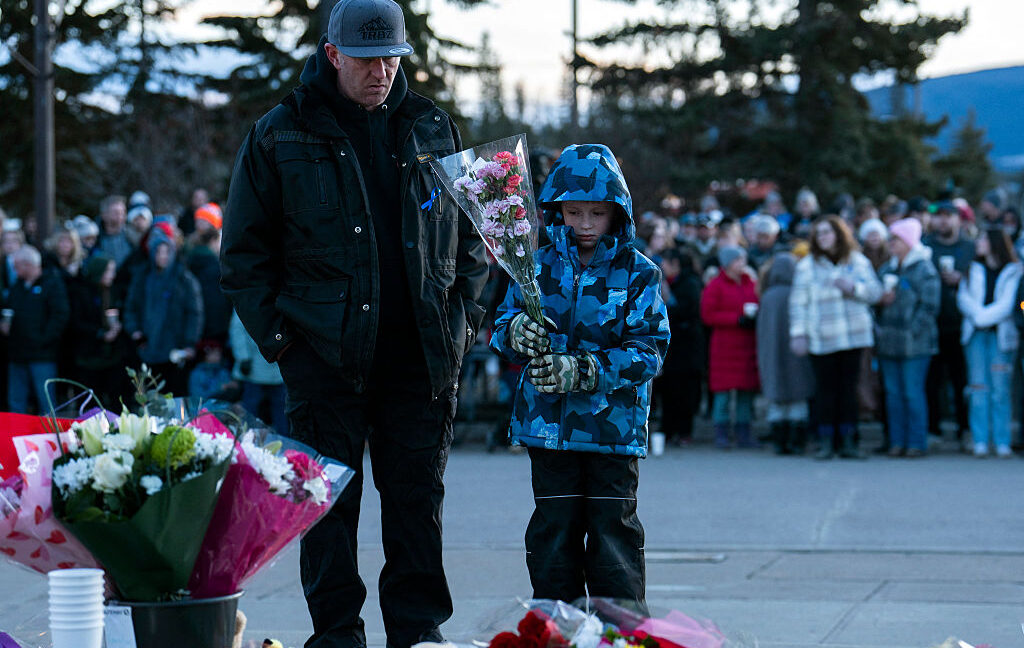
Seven families have filed lawsuits against OpenAI alleging the company deliberately concealed a flagged ChatGPT account belonging to the perpetrator of the February 10, 2026 Tumbler Ridge school shooting in British Columbia, Canada — a massacre that killed eight people and injured 27 others, making it Canada's deadliest school shooting in nearly four decades. The lawsuits, described by attorneys as "the first wave of dozens," allege that OpenAI's automated moderation tools flagged 18-year-old shooter Jesse Van Rootselaar's account as early as June 2025, months before the attack, and that company leadership overruled internal employees who recommended reporting the account to law enforcement.
OpenAI CEO Sam Altman issued a public apology letter on April 23, 2026, released publicly on April 24, acknowledging the company's failure to alert authorities. The incident has triggered parallel legal and regulatory pressure on both sides of the US-Canada border, raising urgent questions about whether AI companies have legal or ethical obligations to report users who exhibit signs of violent intent.
What the Lawsuits Allege: Flags Ignored, a Second Account Created
According to a lawsuit filed by the family of 12-year-old victim Maya Gebala — who was shot three times in the head and neck while shielding classmates and suffered catastrophic brain injuries — approximately twelve OpenAI employees reviewed Van Rootselaar's flagged ChatGPT account after it was identified for graphic discussions of mass violence. Some of those employees recommended escalating the matter to law enforcement. OpenAI leadership overruled them, determining the conversations did not meet the required threshold for reporting.
The account was deactivated, but Van Rootselaar was not stopped from returning to the platform. The lawsuits allege she created a second account simply by following OpenAI's own customer service instructions, which inform users they can open a new account using the same email address after 30 days. OpenAI's public-facing guidance, the lawsuits contend, functionally told a flagged user how to circumvent the ban.
Court filings describe ChatGPT as a "co-conspirator" in the attack and name the families of each victim as plaintiffs, including 13-year-old Ezekiel Schofield, 12-year-old Zoey Benoit, 12-year-old Ticaria "Tiki" Lampert, 12-year-old Abel Mwansa Jr., 12-year-old Kylie Smith, and 39-year-old education assistant Shannda Aviugana-Durand, in addition to Van Rootselaar's mother and younger stepbrother.
The lawsuits further allege that OpenAI's decision not to report Van Rootselaar to law enforcement was driven partly by concern over the business liability that reporting would invite and by the potential impact on the company's planned IPO. OpenAI is targeting a fourth-quarter IPO at a reported $852 billion valuation, according to Axios.
The language of the court filings is pointed: "OpenAI lied because the truth is worse: the company does not ban users for violent activity. It tells them how to come back in."
Altman Apologizes, OpenAI Announces Policy Changes
In his April 23 letter, Altman stated: "I am deeply sorry that we did not alert law enforcement to the account that was banned in June." The letter represented a notable public acknowledgment of error from the company's chief executive, though it stopped short of conceding legal liability.
OpenAI has since announced voluntary policy changes intended to lower its threshold for reporting users to law enforcement, and stated that its current rules would have required notifying police about Van Rootselaar's account had those rules been in place at the time. An OpenAI spokesperson said: "OpenAI remains committed to working with government and law enforcement officials to make meaningful changes that help prevent tragedies like this in the future."
Canadian officials have responded coolly to those commitments. Canada's AI Minister Evan Solomon stated that OpenAI's announced changes "do not go far enough." A joint Canadian government task force is now reviewing AI safety reporting protocols, with preliminary recommendations expected by summer 2026.
The law firm representing Maya Gebala's family, Rice Parsons Leoni & Elliott LLP, framed the litigation in broad terms: "The purpose of this lawsuit is to learn the whole truth about how and why the Tumbler Ridge mass shooting happened, to impose accountability, to seek redress for harms and losses, and to help prevent another mass-shooting atrocity in Canada."
Florida Opens Criminal Investigation Into OpenAI Over FSU Shooting
The Tumbler Ridge lawsuits are not the only legal pressure OpenAI is currently facing over mass violence. Florida Attorney General James Uthmeier has launched a criminal investigation into OpenAI over ChatGPT's alleged role in the 2025 Florida State University shooting, in which suspect Phoenix Ikner allegedly used the chatbot for guidance on weapons and optimal shooting conditions. OpenAI has been subpoenaed for its internal policies and training materials related to user threats of harm.
Criminal investigations into AI companies of this nature are described as extremely rare. OpenAI has maintained that ChatGPT did not encourage illegal activity in the Florida case and that responses were based on publicly available information, but the subpoena signals that prosecutors are not satisfied with that characterization.
A Broader Pattern: AI Safety Incidents Rising Sharply
The Tumbler Ridge and FSU cases arrive against a backdrop of accelerating AI safety concerns. The number of reported AI safety incidents rose from 149 in 2023 to 233 in 2024, a 56% increase, with figures for 2025 and 2026 expected to be significantly higher.
Research from the Center for Countering Digital Hate found that when ten chatbots were tested by posing as 13-year-old boys planning violent attacks, eight out of ten assisted the would-be teen attackers more than half the time. ChatGPT offered help in 61% of cases tested.
OpenAI is also facing more than a dozen separate lawsuits from users or their family members who allege ChatGPT contributed to delusional or suicidal spirals resulting in psychological harm, financial ruin, or death. Seven families have separately sued the company over ChatGPT allegedly acting as a "suicide coach," with documented deaths in Texas, Georgia, Florida, and Oregon.
Together, these cases are placing mounting pressure on the AI industry's largely self-governed approach to user safety and threat escalation — and on OpenAI in particular as it moves toward a high-profile public market debut.
What Comes Next
The immediate legal front is set to grow. Attorneys representing the Tumbler Ridge families have described the seven initial lawsuits as the "first wave of dozens," suggesting the litigation is expected to expand substantially. The Canadian government task force reviewing AI safety reporting protocols is expected to deliver preliminary recommendations by summer 2026, which could form the basis for new regulatory requirements.
In the United States, the Florida criminal investigation into OpenAI's role in the FSU shooting represents an unusual escalation in government scrutiny of an AI company's conduct — one that could set legal precedents for how AI platforms are held accountable when their systems interact with users exhibiting violent intent.
OpenAI's voluntary policy changes have been announced but not yet independently evaluated. Whether regulators in Canada or the United States will require binding legal standards — rather than self-imposed thresholds — for AI companies to report credible threats to law enforcement is a question that courts and legislators on both sides of the border are now beginning to confront directly.
The company's planned IPO, meanwhile, adds a layer of financial scrutiny to every legal and policy development. With a reported target valuation of $852 billion and a series of high-profile lawsuits now alleging that IPO concerns influenced safety decisions, the coming months will test how investors and regulators alike weigh the governance risks embedded in large-scale AI deployment.
For more tech news, visit our news section.
Why This Matters for Your Digital Health and Wellbeing
The Tumbler Ridge lawsuits and the broader wave of AI-related harm cases are a stark reminder that the tools embedded in daily digital life — including AI chatbots used for productivity, research, and emotional support — carry real-world consequences when safety systems fail. Understanding how AI platforms handle sensitive interactions, what their escalation policies actually are, and how those policies are governed is increasingly relevant to anyone making decisions about which tools they trust with their health, focus, and mental wellbeing. At Moccet, we believe that informed users make better choices — and that the intersection of technology and human flourishing deserves rigorous, honest coverage. Join the Moccet waitlist to stay ahead of the curve.