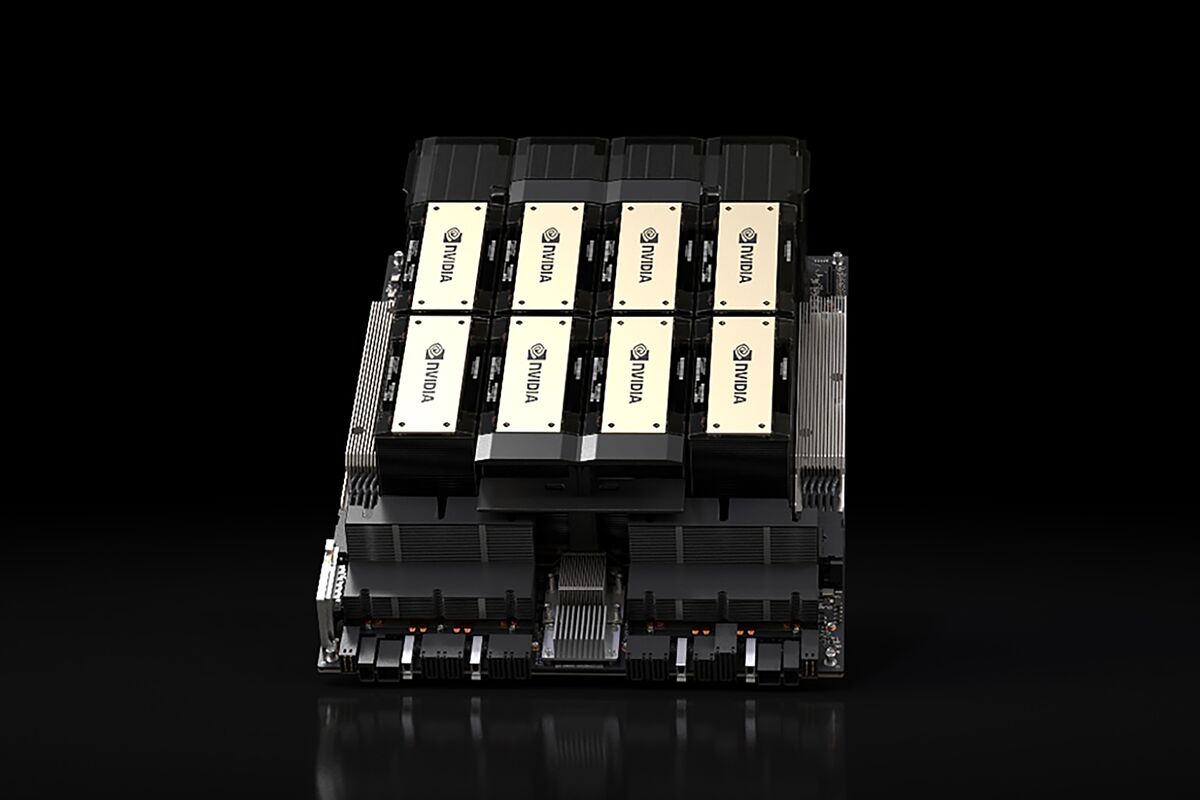
Nvidia Chips Smuggled to Alibaba via Thailand, US Suspects
US Suspects Nvidia Chips Were Smuggled to Alibaba Through Thailand in $2.5 Billion Scheme
US investigators suspect that Bangkok-based OBON Corp. played a central role in smuggling billions of dollars' worth of advanced Nvidia chips — housed in Super Micro Computer servers — into China, with Alibaba Group Holding identified as one of multiple alleged end customers. The allegation, reported by Bloomberg on May 8, 2026, marks a significant escalation in what US prosecutors have already described as one of the largest crackdowns on AI chip smuggling under the current export control regime.
The US has banned the export of high-end Nvidia chips to China since 2022, citing national security concerns. Despite those restrictions, alleged smuggling networks have reportedly exploited Southeast Asian intermediaries to reroute restricted hardware — and the OBON case now sits at the center of that story.
How the Alleged Nvidia Chip Smuggling Scheme Worked
In March 2026, the US Justice Department charged Super Micro Computer co-founder Yih-Shyan "Wally" Liaw, sales manager Ruei-Tsang "Steven" Chang, and contractor Ting-Wei "Willy" Sun with conspiring to route US-made servers through Taiwan to Southeast Asia, where they were reportedly repackaged into unmarked boxes before being smuggled into China. Liaw and Sun were arrested in California on March 19, 2026; Chang remains at large. All three have pleaded not guilty to the diversion charges.
US prosecutors alleged that at least $2.5 billion in US AI technology was moved through the scheme, including more than $500 million shipped between April and mid-May 2025 alone. The Justice Department described the alleged operation in stark terms: "The defendants' scheme became more brazen over time and resulted in massive quantities of servers with controlled US AI technology being sent to China."
In the indictment, prosecutors referred to the unnamed Southeast Asian intermediary only as "Company-1." Bloomberg subsequently identified that entity as OBON Corp., a Bangkok-based firm. The indictment itself does not name OBON or Alibaba, and US authorities have not publicly accused either company of wrongdoing.
Sales to "Company-1" accounted for nearly $100 million in revenue for Super Micro in the quarter ending June 2024 — a rapid increase that eventually prompted the server maker to audit and temporarily pause shipments that October. Super Micro has since launched an internal investigation in response to the indictment, and Super Micro co-founder Liaw has stepped down from the company's board and is no longer with the firm in any capacity.
Super Micro shareholders have also separately sued the company in March 2026, accusing it of securities fraud by allegedly concealing its reliance on sales to China that violated US export laws. The company's stock dropped sharply following the March 2026 indictment, with shares down roughly 33% over the months following the arrests and a loss of more than $6 billion in market capitalization in a single trading session.

OBON, Siam AI, and the Thailand Connection
What makes the OBON case particularly striking is the company's publicly prominent role in Thailand's national AI ambitions. According to Bloomberg, OBON is credited with creating Siam AI, Thailand's sovereign cloud champion, per a May 2024 press release. Siam AI was incorporated as a separate company four months before that announcement.
Siam AI went on to win Thailand's first official Nvidia Cloud Partner designation and hosted Nvidia CEO Jensen Huang at an event focused on sovereign AI. At a December 2024 fireside chat with Siam AI's CEO, Huang remarked: "The most important part of artificial intelligence is the data. And the data of Thailand belongs to the Thai people."
At the center of both organizations is Ratanaphon Wongnapachant — the CEO of Siam AI and the nephew of Thai billionaire and former Prime Minister Thaksin Shinawatra. According to Bloomberg, Wongnapachant was also the CEO of OBON through at least May 2024. He has stated that he left OBON when he launched Siam AI.
When asked about the allegations, Wongnapachant drew a firm line between the two companies: "I will only answer regarding Siam AI, which is that the company is not involved in this." Siam AI also released a statement saying it "is committed to full adherence to all applicable US export and re-export control laws and regulations," and that it "maintains independent headquarters and does not share an office with OBON."
Alibaba Denies Any Role in the Alleged Scheme
Bloomberg sources identified Alibaba Group Holding as one of multiple alleged end customers for the diverted servers. Alibaba has firmly denied those claims. An Alibaba spokesperson stated: "Alibaba has no business relationship with Super Micro, OBON or any third-party brokers who may have been mentioned in the indictment in question." The company also told Reuters that banned Nvidia chips have never been used in its data centers.
It bears repeating: the indictment does not name Alibaba, and US authorities have not publicly accused the company of any wrongdoing. The Bloomberg reporting is based on what US investigators are said to suspect, not on formal charges against Alibaba.
Nvidia's Partner Ecosystem Under Scrutiny
The case raises uncomfortable questions for Nvidia, whose hardware sits at the center of the alleged smuggling network. The company has responded by emphasizing compliance obligations across its partner ecosystem. In an emailed statement, a Nvidia spokesperson said: "Our ecosystem partners must be committed to strict compliance at every level."
The OBON and Siam AI situation is not an isolated incident. According to Bloomberg, two official Nvidia partners headquartered in Singapore have drawn government scrutiny for alleged semiconductor trade violations. The parent company of a third Nvidia partner — located in China — has disclosed to Beijing that it procured Super Micro AI servers containing banned Nvidia chips.
The breadth of these cases suggests that the challenge of enforcing AI chip export controls extends well beyond a single company or country.
Why This Matters: Export Controls, Southeast Asia, and the AI Arms Race
The US has restricted exports of advanced Nvidia AI chips to China since 2022, with national security — specifically concerns over potential military applications — cited as the primary rationale. Despite this, the alleged smuggling schemes that have come to light in 2026 suggest that enforcement has faced significant gaps, particularly when hardware is routed through third countries.
Thailand has emerged as a notable transit point in these allegations. According to Bloomberg, the US has three times planned or considered export controls on semiconductor shipments to Thailand — including one draft rule specifically designed to address smuggling concerns — but has never moved forward with implementation. Whether the OBON case changes that calculus remains to be seen.
The economics of the restricted chip market illustrate the financial incentives driving these alleged schemes. Chinese tech firms reportedly now pay around $1 million for Nvidia B300 servers — nearly double the roughly $550,000 price in the US — due to export controls and reduced gray-market supply. That kind of price differential creates powerful incentives for circumvention.
In a limited concession, the US approved sales of Nvidia's second-most powerful H200 chips to certain buyers in January 2026 under specified conditions — but the most advanced chips remain off-limits for Chinese buyers, keeping the pressure on illicit supply chains.
What Happens Next
The criminal case against Liaw, Chang, and Sun is proceeding, with all three defendants having pleaded not guilty. Chang remains at large. Super Micro's internal investigation is ongoing, and the separate shareholder securities fraud lawsuit adds another layer of legal exposure for the company.
For OBON and Siam AI, the Bloomberg report has placed both organizations — and their leadership — under an intense international spotlight. Whether US authorities take formal action against OBON, or pursue any of the other companies named in press reporting but not in the indictment, is not yet known.
The case is also likely to intensify policy debates in Washington about the effectiveness of the current export control framework and whether additional restrictions on semiconductor sales to Southeast Asian countries are warranted. Thailand, Singapore, and other regional hubs may face increased scrutiny as the US government evaluates how restricted chips continue to reach Chinese end-users despite existing controls.
For companies operating in or around Nvidia's partner ecosystem, the message from the indictment — and from Nvidia's own public statement — is clear: compliance obligations apply at every link in the supply chain, and the consequences of falling short are now demonstrably severe.
For more tech news, visit our news section.
The Bigger Picture for Productivity and the AI Economy
The alleged smuggling of advanced AI chips isn't just a national security story — it's a signal of how fiercely competitive the global AI infrastructure race has become. The compute that powers AI tools, productivity platforms, and health technology increasingly flows through contested supply chains. Understanding where that infrastructure comes from, and how reliably it can be accessed, matters to anyone building or depending on AI-powered tools. At Moccet, we track the forces shaping the AI economy so you can make smarter decisions about the technology you use every day. Join the Moccet waitlist to stay ahead of the curve.