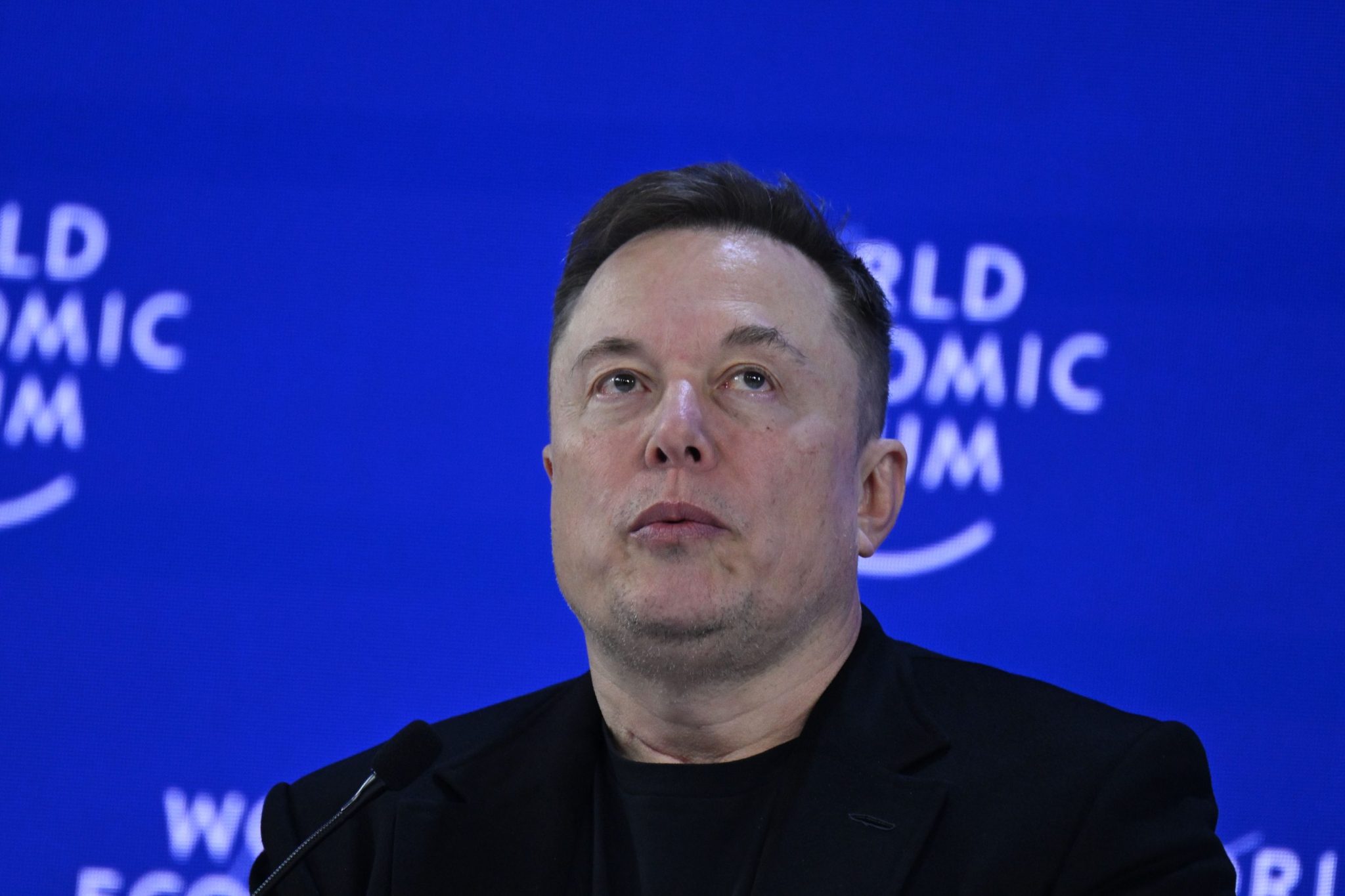
Musk Drops Fraud Claims Against OpenAI Before Trial
On the eve of what promises to be one of the most closely watched tech trials in recent memory, Elon Musk dropped his fraud claims against OpenAI, CEO Sam Altman, and president Greg Brockman on April 25, 2026, dramatically narrowing a lawsuit that once contained 26 separate allegations. US District Judge Yvonne Gonzalez Rogers agreed to Musk's request to "streamline the case," leaving only two claims — unjust enrichment and breach of charitable trust — to proceed to trial in federal court in Oakland, California. Jury selection is set to begin Monday, April 28, with opening arguments to follow on Tuesday, April 29.
From 26 Claims to 2: How the Musk v. Altman Case Narrowed on the Eve of Trial
When Musk filed his lawsuit — officially docketed as Musk v. Altman, 4:24-cv-04722, in the US District Court for the Northern District of California — in November 2024, it was sweeping in scope. The complaint asserted 26 claims against OpenAI, Altman, Brockman, and Microsoft, alleging that the company's transformation from a nonprofit AI research organization into a for-profit enterprise betrayed its founding mission and the donors who funded its early work.
By the morning of April 25, 2026, that sprawling complaint had been reduced to two surviving claims. Judge Gonzalez Rogers, who was appointed to the Northern District of California by former President Barack Obama in 2011 and has presided over several high-profile tech cases including the antitrust dispute between Epic Games and Apple, granted Musk's last-minute request to drop the fraud and constructive fraud allegations ahead of trial.
The two remaining claims — unjust enrichment and breach of charitable trust — center on Musk's core argument that OpenAI's shift toward a for-profit model improperly benefited Altman, Brockman, and commercial investors, including Microsoft, at the expense of the charitable mission the organization was founded to serve. OpenAI, Altman, Brockman, and Microsoft have all denied wrongdoing.
The decision to drop the fraud claims came as a surprise to OpenAI's legal team, which had publicly criticized Musk's litigation conduct in the days leading up to trial. In a court filing, OpenAI's lawyers wrote: "Trial begins in five days but Plaintiff still refuses to state plainly what claims he will pursue and what remedies he will seek." The company's lawyers also characterized the last-minute maneuvering as "evasive tactics."
What Musk Is Actually Seeking — and How the Trial Will Unfold
The trial will proceed in two distinct phases. In the first phase, a jury will hear arguments and testimony on the two remaining claims — unjust enrichment and breach of charitable trust — and issue an advisory verdict. Critically, that advisory verdict will not be binding on Judge Gonzalez Rogers. In the second phase, the judge will hear arguments on the specific remedies Musk is seeking and issue her own ruling.
Those remedies are significant. Musk is seeking between $79 billion and $134 billion in damages — a figure he has proposed be directed to OpenAI's charitable arm rather than to himself personally. He is also asking the court to issue an order restoring OpenAI's status as a nonprofit research organization and to remove both Altman and Brockman from their leadership roles. Altman currently serves as CEO; Brockman serves as president.
The damages figure reflects the scale of what Musk views as the harm done by OpenAI's for-profit restructuring, particularly given that the company has since attracted massive commercial investment. OpenAI is currently valued at over $850 billion following its restructuring, which involved the creation of a for-profit subsidiary and substantial investment from Microsoft.
Musk's push to remove Altman and Brockman from their roles adds a deeply personal dimension to the litigation. Musk and Altman co-founded OpenAI together in 2015, along with Brockman, with the stated goal of developing artificial intelligence for the broad benefit of humanity. The organization was structured as a nonprofit specifically to insulate its research mission from commercial pressures. Musk departed OpenAI's board in 2018 following reported disagreements over the company's direction, including a failed effort to merge the startup with Tesla.
A Rivalry That Has Grown Far Beyond the Courtroom
The trial arrives at a moment when the personal and commercial rivalry between Musk and Altman has expanded well beyond their shared history at OpenAI. In 2023, Musk co-founded xAI as a direct competitor to OpenAI, and he subsequently merged xAI with SpaceX in a deal that valued the combined entity at $1.25 trillion. That competitive context has featured prominently in OpenAI's public characterizations of the lawsuit.
OpenAI has described the litigation as "part of [Musk's] ongoing pattern of harassment," arguing that Musk's legal actions are designed to benefit xAI by destabilizing its primary competitor. The company has consistently denied that its restructuring violated any charitable obligations or that Altman and Brockman acted improperly.
The litigation has also intersected with Musk's broader attempts to influence OpenAI's direction outside the courtroom. In February 2026, OpenAI rejected an unsolicited bid from Musk to acquire the assets of the nonprofit that controls the company for $97.4 billion. OpenAI's response was unambiguous: "OpenAI is not for sale." Months after rejecting that bid, OpenAI completed its for-profit restructuring plan.
Musk v. Altman is not the only legal front in this broader conflict. In 2025, X (formerly Twitter) and xAI sued OpenAI and Apple for alleged anticompetitive behavior; a hearing in that case is scheduled for May in Texas. Separately, in February 2026, a federal judge in California dismissed a different xAI lawsuit that had accused OpenAI of stealing trade secrets.
Why This Trial Matters Beyond the Two Parties
The stakes of Musk v. Altman extend well beyond the personal rivalry between its two most prominent figures. At its core, the case raises a question that has become increasingly pressing as AI companies attract unprecedented commercial investment: what obligations, if any, do organizations founded with a charitable mission owe to that mission when commercial opportunities arise?
OpenAI's evolution from a nonprofit research lab into a company now valued at over $850 billion — with Microsoft having invested around $13 billion — is the sharpest available illustration of the tension between AI's public-interest origins and its commercial present. The breach of charitable trust claim that will be heard at trial is, in essence, a legal test of whether that tension crossed a line.
The trial's outcome could have implications for how AI organizations structure themselves and represent their missions to donors, regulators, and the public. A ruling in Musk's favor — even a partial one — could set precedents affecting how courts view the fiduciary obligations of nonprofit AI organizations that pursue for-profit restructuring.
For OpenAI specifically, the timing of the trial is particularly sensitive. The company is targeting a potential fourth-quarter 2026 market debut, and in documents distributed to prospective investors, OpenAI has itself characterized the ongoing litigation with Musk as a potential risk to its business. A prolonged or high-profile trial — especially one involving a non-binding jury verdict followed by a separate judicial ruling on remedies — introduces meaningful uncertainty into that IPO timeline.
Judge Gonzalez Rogers' two-phase trial structure also means the proceedings could extend well beyond the initial jury phase. Even if the advisory verdict favors one side, the judge's independent ruling on remedies introduces a second layer of uncertainty. Musk's demand that any damages be directed to OpenAI's charitable arm, rather than to himself, is an unusual posture that may complicate how the court evaluates the appropriate remedy.
What Happens Next
With jury selection beginning Monday, April 28, and opening arguments set for Tuesday, April 29, the trial is now essentially underway. The two surviving claims — unjust enrichment and breach of charitable trust — will be argued before a jury, which will then issue an advisory verdict that is not binding on Judge Gonzalez Rogers.
Following the jury phase, the court will move to the remedies phase, during which Judge Gonzalez Rogers will hear arguments on Musk's demands: damages of up to $134 billion directed to OpenAI's charitable arm, removal of Altman and Brockman from their leadership roles, and restoration of OpenAI's nonprofit status. The judge will then issue her own ruling on those remedies.
OpenAI, Altman, Brockman, and Microsoft are expected to contest both the underlying claims and the remedies vigorously. The company's lawyers have already signaled their view that Musk's litigation conduct has been strategically evasive, and OpenAI's broader position — that the lawsuit serves the competitive interests of xAI rather than any legitimate legal grievance — is likely to feature in its trial arguments.
The case also raises the question of whether further procedural moves are possible before or during trial. Musk's last-minute decision to drop 24 of his original 26 claims on the eve of jury selection suggests that the litigation strategy on his side remains fluid. How Judge Gonzalez Rogers manages the proceedings in the days ahead will be closely watched by legal observers, AI industry participants, and prospective OpenAI investors alike.
For more tech news, visit our news section.
The Bigger Picture for Productivity and Decision-Making
The Musk v. Altman trial is more than a legal spectacle — it is a real-time case study in how the decisions made by the organizations building AI tools will shape the technology that billions of people use to work, learn, and make decisions. As AI platforms become increasingly embedded in daily productivity workflows, understanding the legal, ethical, and structural forces shaping those platforms matters for anyone who relies on them. Staying informed is itself a competitive advantage. Join the Moccet waitlist to stay ahead of the curve.