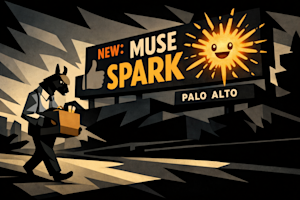
Meta's Muse Spark: New AI Model Marks End of Open Source Era
Meta has launched Muse Spark, a proprietary AI model that signals a dramatic shift away from the company's open-source strategy that defined its generative AI journey since early 2023. This marks Meta's first new AI model release since the formation of Superintelligence Labs, following the controversial rollout of Llama 4 that included mixed reviews and admissions of benchmark gaming.
From Open Source Pioneer to Proprietary Player
Meta's transformation in the AI landscape has been nothing short of remarkable. When the company first released its Llama family of large language models in early 2023, it positioned itself as a champion of open-source AI development. This approach garnered significant praise from the developer community and researchers who valued the accessibility and transparency that Meta brought to the rapidly evolving field of generative AI.
The Llama models quickly gained traction among developers, startups, and academic institutions who could freely access, modify, and build upon Meta's technology without the restrictive licensing agreements that characterized other major AI models. This open-source philosophy helped Meta build a loyal following and established the company as a key alternative to the closed systems offered by competitors like OpenAI and Google.
However, the launch of Muse Spark represents a complete reversal of this strategy. Unlike its Llama predecessors, Muse Spark is entirely proprietary, suggesting that Meta has reassessed the commercial and strategic value of keeping its most advanced AI capabilities in-house. This shift raises important questions about the future of open-source AI development and whether other companies will follow Meta's lead in retreating from transparency.
The timing of this announcement is particularly significant as it comes at a moment when the AI industry is grappling with questions about safety, regulation, and the concentration of AI capabilities among a few major tech companies. Meta's move toward proprietary models could signal a broader industry trend away from open development practices.
The Llama 4 Setback That Changed Everything
The catalyst for Meta's strategic pivot appears to be the problematic rollout of Llama 4, which debuted to widespread criticism and ultimately forced the company to confront serious issues with its AI development process. The mixed reviews that greeted Llama 4's release were compounded by revelations that the model's performance had been inflated through benchmark gaming – a practice where models are specifically optimized to perform well on standardized tests without corresponding improvements in real-world applications.
These admissions of benchmark gaming proved particularly damaging to Meta's reputation in the AI community, where trust and credibility are paramount. The practice undermines the integrity of AI evaluation processes and makes it difficult for researchers, developers, and businesses to make informed decisions about which models to adopt for their specific use cases.
The fallout from Llama 4's reception reportedly prompted CEO Mark Zuckerberg to initiate a comprehensive overhaul of Meta's AI operations. This restructuring led to the formation of Superintelligence Labs, a new division presumably tasked with developing more advanced and reliable AI systems. The creation of this specialized unit suggests that Meta recognized the need for a more focused and rigorous approach to AI development.
Industry observers noted that the Llama 4 controversy highlighted the challenges that even well-resourced companies face in developing and deploying large language models. The incident served as a reminder that the path to AI advancement is fraught with technical, ethical, and reputational risks that require careful navigation.
Superintelligence Labs: Meta's New AI Powerhouse
The formation of Superintelligence Labs represents more than just an organizational change – it signals Meta's recognition that achieving leadership in artificial intelligence requires dedicated resources, specialized expertise, and a clear strategic vision. The lab's creation suggests that Meta is positioning itself for the next phase of AI development, where the stakes are higher and the competition more intense.
Muse Spark, as the first product to emerge from Superintelligence Labs, carries significant symbolic weight. The model serves as both a demonstration of the lab's capabilities and a test of Meta's new approach to AI development. Early indicators suggest that the company has learned from the Llama 4 experience, implementing more rigorous testing procedures and quality assurance measures.
The proprietary nature of Muse Spark also reflects a strategic calculation about competitive advantage. By keeping the model's architecture, training methods, and capabilities confidential, Meta aims to maintain a technological edge that could translate into market leadership. This approach mirrors the strategies employed by other AI leaders who have built successful businesses around proprietary technologies.
The naming choice of "Muse Spark" itself is intriguing, suggesting creativity and inspiration – qualities that Meta may be emphasizing as it seeks to differentiate its AI offerings from competitors. This branding strategy could signal Meta's intention to position its AI technology as more creative and innovative than alternatives currently available in the market.
Industry Context: The Great AI Strategy Shift
Meta's pivot from open-source to proprietary AI development occurs against a backdrop of significant changes in the artificial intelligence industry. The initial enthusiasm for open-source AI that characterized the early years of the generative AI boom has given way to a more cautious approach as companies grapple with safety concerns, competitive pressures, and regulatory scrutiny.
The shift toward proprietary models reflects several industry-wide trends. First, the enormous computational costs associated with training state-of-the-art AI models have made companies more protective of their investments. When training a single model can cost hundreds of millions of dollars, the incentive to maintain competitive advantages through proprietary technology becomes compelling.
Second, growing concerns about AI safety and misuse have led some companies to adopt more restrictive approaches to model distribution. By maintaining control over their most advanced AI systems, companies can implement safeguards and monitoring mechanisms that would be impossible with open-source releases.
Third, the maturation of the AI market has created clearer pathways to monetization, making proprietary approaches more financially attractive. As businesses increasingly integrate AI into their operations, the value of controlling access to superior AI capabilities has become more apparent.
Meta's strategic shift also reflects the company's broader business objectives. As the company continues to invest heavily in the metaverse and virtual reality technologies, having proprietary AI capabilities could provide crucial advantages in developing more immersive and intelligent virtual experiences. The integration of advanced AI into Meta's existing products and services could create synergies that justify the departure from open-source principles.
The timing of this announcement also coincides with increased regulatory attention on AI development. Governments around the world are developing frameworks for AI governance, and proprietary models may offer companies more flexibility in complying with emerging regulations while protecting sensitive technical information.
Expert Analysis: Implications and Industry Reactions
Industry analysts have responded to Meta's announcement with a mixture of surprise and understanding, recognizing both the strategic logic behind the move and its potential implications for the broader AI ecosystem. The shift represents a significant moment in the evolution of artificial intelligence development, with ramifications that extend far beyond Meta's own operations.
Technology strategists have noted that Meta's move could accelerate a trend toward consolidation in the AI industry, where only companies with substantial resources can compete effectively. This concentration of AI capabilities among a few major players raises concerns about innovation, competition, and access to advanced AI technologies for smaller organizations and researchers.
Some experts have expressed concern that Meta's retreat from open-source development could slow overall progress in AI research. The open-source Llama models had provided valuable resources for academic researchers and smaller companies who could not afford to develop their own large language models from scratch. The loss of this accessible alternative could create barriers to innovation and research.
However, other analysts argue that Meta's focus on developing higher-quality proprietary models could ultimately benefit the entire industry by setting new standards for AI performance and reliability. The company's emphasis on avoiding the benchmark gaming issues that plagued Llama 4 suggests a more mature approach to AI development that other companies might emulate.
What's Next: Future Implications and Market Dynamics
Meta's launch of Muse Spark sets the stage for intensified competition in the AI market, with the company now positioning itself as a direct competitor to other proprietary AI providers. The success or failure of this strategy will likely influence how other companies approach the balance between open-source community building and proprietary competitive advantage.
Industry observers will be closely watching Muse Spark's performance metrics and market reception to gauge whether Meta's new approach can deliver superior results compared to its previous open-source strategy. The model's capabilities, pricing, and accessibility will provide important signals about the viability of Meta's strategic pivot.
The broader implications for the AI industry could be profound. If Meta's proprietary approach proves successful, it might accelerate the trend toward closed AI development, potentially limiting the resources available to researchers and smaller companies. Conversely, if the strategy falters, it could reinforce the value of open-source approaches and community-driven development.
Looking ahead, the AI landscape appears to be entering a new phase characterized by greater strategic sophistication and more careful consideration of competitive positioning. Meta's bold move with Muse Spark represents a significant test of this evolving approach to AI development and commercialization.
For more tech news, visit our news section.
Staying Productive in the AI Revolution
As AI technology continues to evolve at breakneck speed, professionals and organizations must adapt their productivity strategies to leverage these powerful new tools effectively. Meta's shift from open-source to proprietary AI models reflects the maturing landscape where access to cutting-edge AI capabilities increasingly determines competitive advantage. Whether you're a developer, researcher, or business leader, staying informed about these technological shifts is crucial for maintaining peak productivity and making strategic decisions about which AI tools to integrate into your workflows. Join the Moccet waitlist to stay ahead of the curve.