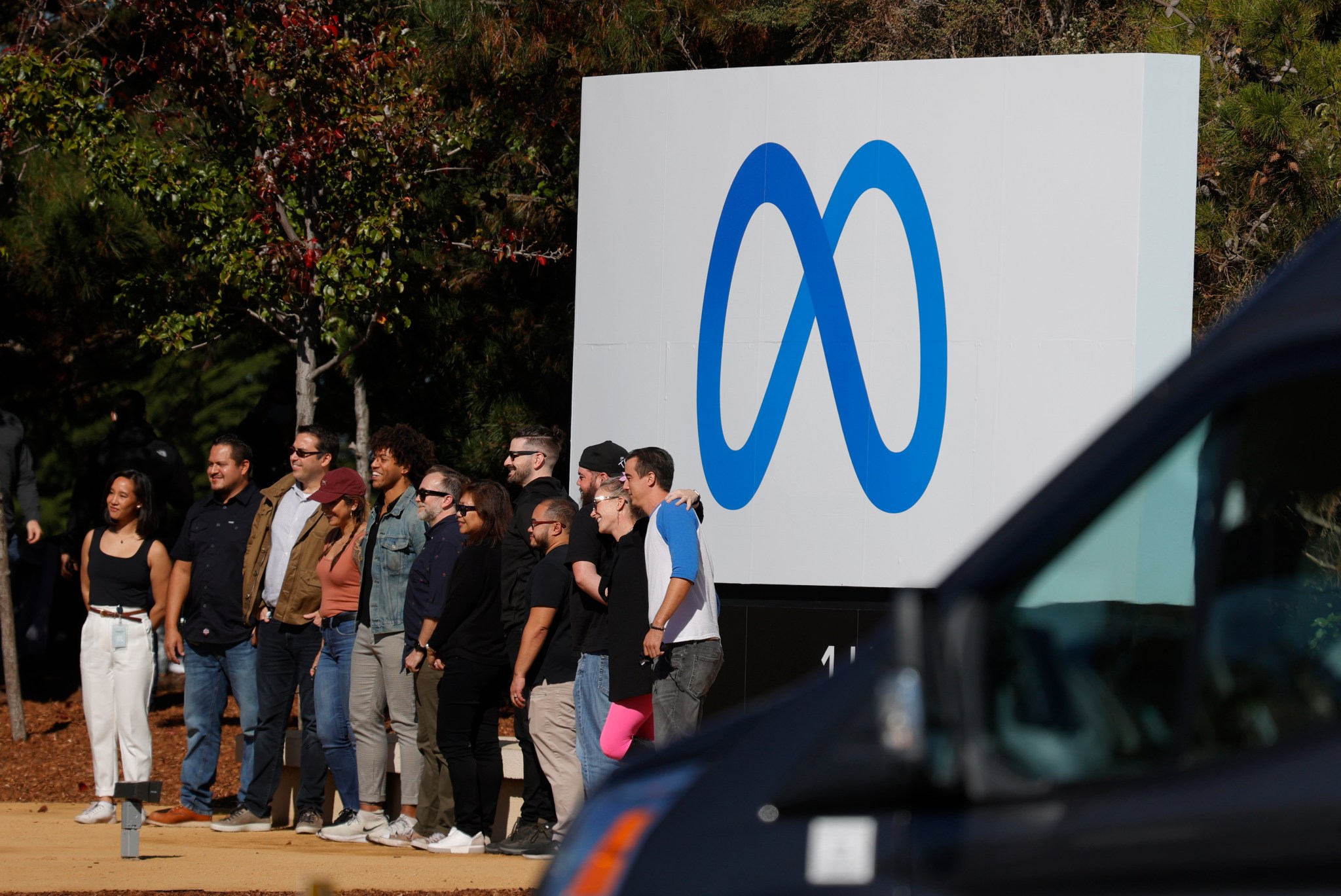
Meta, Microsoft look to trim workforces amid heavy AI spending
```json { "title": "Meta and Microsoft Cut Jobs Amid AI Spending Surge", "metaDescription": "Meta plans to cut 8,000 jobs (10% of its workforce) and Microsoft offers voluntary buyouts to ~8,750 U.S. employees as Big Tech races to fund AI.", "content": "<h2>Meta to Lay Off 8,000 Workers, Microsoft Offers Buyouts as AI Costs Reshape Big Tech Hiring</h2>\n\n<p>On April 23, 2026, two of the world's largest technology companies announced significant workforce reductions on the same day, underscoring how the enormous cost of building artificial intelligence infrastructure is forcing Big Tech to cut headcount even as profits remain strong. Meta Platforms confirmed it will eliminate approximately 8,000 jobs — roughly 10% of its global workforce — effective May 20, 2026, while Microsoft revealed it is offering voluntary buyouts to an estimated 8,750 U.S. employees, a move the 51-year-old company described as a first in its history. Both announcements arrived as the industry continues to grapple with a fundamental tension: record revenues on one side, and the staggering capital requirements of an AI arms race on the other.</p>\n\n<h2>Meta's Largest Layoffs Since the 'Year of Efficiency'</h2>\n\n<p>Meta's cuts represent the company's most sweeping workforce reduction since its so-called Year of Efficiency in 2022 and 2023, during which the company eliminated more than 21,000 roles across two separate rounds — 11,000 in late 2022 and 10,000 in March 2023. Thursday's announcement brings that recent history sharply back into focus.</p>\n\n<p>The layoffs were communicated to employees via an internal memo authored by Meta's Chief People Officer Janelle Gale. The memo confirmed that the cuts will affect approximately 8,000 of Meta's 78,865 global employees — the headcount the company reported at the end of 2025 — and that Meta will also scrap plans to fill 6,000 open roles it had previously intended to hire for. Combined, that represents a planned workforce reduction of nearly 14,000 positions when unfilled openings are factored in.</p>\n\n<p>In the memo, Gale was direct about the reasoning. "We're doing this as part of our continued effort to run the company more efficiently and to allow us to offset the other investments we're making," she wrote. She also acknowledged the human cost of the decision: "This is not an easy tradeoff and it will mean letting go of people who have made meaningful contributions to Meta during their time here."</p>\n\n<p>The cuts don't arrive in a vacuum. Earlier in 2026, Meta had already cut between 10% and 15% of its Reality Labs workforce in January and shed approximately 700 positions across at least five divisions in March. Thursday's announcement is the largest and most sweeping of those moves.</p>\n\n<p>Nor do the cuts reflect a company in financial distress. Meta closed out 2025 with revenue exceeding $200 billion and net profit of $60 billion for the full year. In Q4 2025 alone, the company posted revenue of $59.89 billion — up 24% year-over-year — and net income of $22.77 billion, up 9%, both quarterly records. The layoffs are not a rescue operation. They are, as the company frames it, a reallocation.</p>\n\n<p>That reallocation is pointed squarely at AI. Meta planned to roughly double its AI spending in 2026 to approximately $135 billion, up from $72 billion in 2025. To fund that buildout, the company tapped the private credit market to raise $29 billion for data centers and has a planned $600 billion investment in data center infrastructure. Headcount, it appears, is one of the levers being pulled to help finance that ambition.</p>\n\n<p>Also notable: the same week as the layoff announcement, Meta revealed to staff a new internal tool called the Model Capability Initiative (MCI), which captures keystrokes and mouse clicks from staff computers to train AI agents. The timing of that disclosure — alongside a 10% workforce cut — drew significant attention inside and outside the company.</p>\n\n<h2>Microsoft's Voluntary Buyout: A First in 51 Years</h2>\n\n<p>Microsoft's workforce move took a different form, but the underlying logic runs parallel. On the same Thursday, the company confirmed it is offering voluntary buyouts to U.S. employees — a program it described as unprecedented in the company's 51-year history. The offer targets workers whose age plus years of service totals 70 or more, excluding certain senior roles and employees on sales incentive plans, according to a memo from Microsoft's Chief People Officer Amy Coleman.</p>\n\n<p>Approximately 7% of Microsoft's 125,000-strong U.S. workforce is eligible for the offer, equating to roughly 8,750 workers. Microsoft employs approximately 228,000 full-time workers globally, according to its 2025 Annual Report.</p>\n\n<p>In her memo, Coleman struck a tone that was simultaneously urgent and appreciative. "I've never seen the company move with this level of urgency and pace, and I see the intensity and agility you bring every day," she wrote.</p>\n\n<p>The buyout offer follows a year in which Microsoft cut more than 15,000 jobs globally while simultaneously spending $88 billion on AI in fiscal year 2025. Like Meta, Microsoft is navigating the same core challenge: sustaining massive AI infrastructure investment while managing operating costs and meeting investor expectations.</p>\n\n<h2>A Broader Wave: Amazon and the Industry Pattern</h2>\n\n<p>Meta and Microsoft are not alone. Amazon announced plans in January 2026 to eliminate approximately 16,000 corporate jobs, adding to a pattern of workforce reductions that has become a defining feature of the post-2024 tech landscape.</p>\n\n<p>The scale of these cuts reflects pressures that have been building for years. According to data from consulting firm Challenger, Gray & Christmas, AI was responsible for almost 55,000 layoffs in the U.S. in 2025 alone. Overall U.S. job cuts topped 1.17 million in 2025 — the highest level since the COVID-19 pandemic in 2020.</p>\n\n<p>The standard explanation offered by companies — and widely repeated in coverage — is that AI spending is crowding out headcount budgets. The logic is straightforward: building and operating AI data centers at the scale these companies are pursuing requires capital expenditure that must be offset somewhere, and workforce costs are among the largest controllable line items on a tech company's balance sheet.</p>\n\n<p>However, it is worth noting that not all observers attribute the layoff wave primarily to AI's displacement of human labor. Some analysts have pointed to post-pandemic overhiring as a significant underlying factor, suggesting that AI may be serving as a convenient explanatory frame for reductions that reflect earlier hiring excesses as much as automation-driven efficiency gains. The reality, based on available evidence, likely involves both forces operating simultaneously — and the data does not yet cleanly separate them.</p>\n\n<h2>What the Numbers Actually Show</h2>\n\n<p>What is clear is that the companies announcing these cuts are not doing so from positions of weakness. Meta's financial performance in 2025 was by any measure exceptional: record quarterly revenue, record quarterly net income, and a full-year profit of $60 billion. Microsoft similarly remains one of the most profitable companies on the planet. These are not distressed businesses shedding workers to survive. They are highly profitable enterprises restructuring their cost bases to accelerate a specific strategic bet — AI — that requires capital at a scale not previously seen in the industry.</p>\n\n<p>Meta's planned $135 billion in AI spending for 2026, its $600 billion data center commitment, and its $29 billion private credit raise together paint a picture of a company that has decided AI infrastructure is its primary investment priority, and is willing to absorb the human and reputational costs of large-scale layoffs to fund it. Microsoft's $88 billion in AI spending in fiscal 2025, followed by buyouts targeting its longest-tenured U.S. employees, tells a similar story.</p>\n\n<h2>What Comes Next</h2>\n\n<p>For Meta, the immediate next milestone is May 20, 2026 — the date Gale's memo confirmed the layoffs will take effect. Affected employees have been notified, and the company has indicated the cuts span multiple divisions. The decision not to fill 6,000 open roles adds a further, quieter dimension to the workforce reduction that won't generate severance costs but will meaningfully constrain the company's headcount growth trajectory.</p>\n\n<p>For Microsoft, the voluntary nature of the buyout program means the final number of employees who accept the offer remains to be seen. The program is capped at eligibility for roughly 8,750 workers, but voluntary programs historically see variable uptake, and the company has not publicly stated a target acceptance rate.</p>\n\n<p>Whether other major tech companies follow with similar announcements in the near term remains an open question. The structural pressures driving these moves — massive AI capex, investor scrutiny of operating costs, and the tail end of pandemic-era hiring surges — are not unique to Meta and Microsoft. Amazon's 16,000-person cut earlier in 2026 suggests the wave has already extended beyond these two companies.</p>\n\n<p>What is harder to predict is when, or whether, the AI infrastructure investment cycle will begin generating the kind of revenue growth that allows these companies to resume hiring at the pace they've pursued in recent years. For now, the message from two of the industry's largest players is consistent: AI buildout comes first, and workforce size is a variable to be managed around it.</p>\n\n<p>Gale's note to Meta employees captured the tone of the moment plainly: "I know this is unwelcome news and confirming this puts everyone in an uneasy state, but we feel this is the best path forward, given the circumstances."</p>\n\n<p>For more tech news, visit our <a href=\"/news\">news section</a>.</p>\n\n<h2>What This Means for You</h2>\n\n<p>Large-scale workforce shifts at companies like Meta and Microsoft ripple far beyond Silicon Valley — they reshape hiring markets, alter team structures, and place new productivity demands on the workers who remain. Whether you're navigating a changing job landscape, managing a team through uncertainty, or simply trying to stay informed about the forces reshaping work, staying ahead requires reliable information and the right tools. Moccet is built for exactly that intersection of health, productivity, and the future of work. <a href=\"/#waitlist\">Join the Moccet waitlist to stay ahead of the curve.</a></p>", "excerpt": "Meta Platforms announced plans to cut approximately 8,000 employees — 10% of its global workforce — effective May 20, 2026, while Microsoft simultaneously revealed voluntary buyouts for roughly 8,750 U.S. workers, marking a first in the company's 51-year history. Both moves are explicitly linked to offsetting the enormous cost of accelerating AI infrastructure investment, with Meta alone planning to spend approximately $135 billion on AI in 2026.", "keywords": ["Meta layoffs 2026", "Microsoft buyouts 2026", "Big Tech job cuts AI spending", "Meta workforce reduction", "AI infrastructure investment"], "slug": "meta-microsoft-layoffs-ai-spending-2026" } ```