Canada Banks Meet on Anthropic AI Cybersecurity Risks
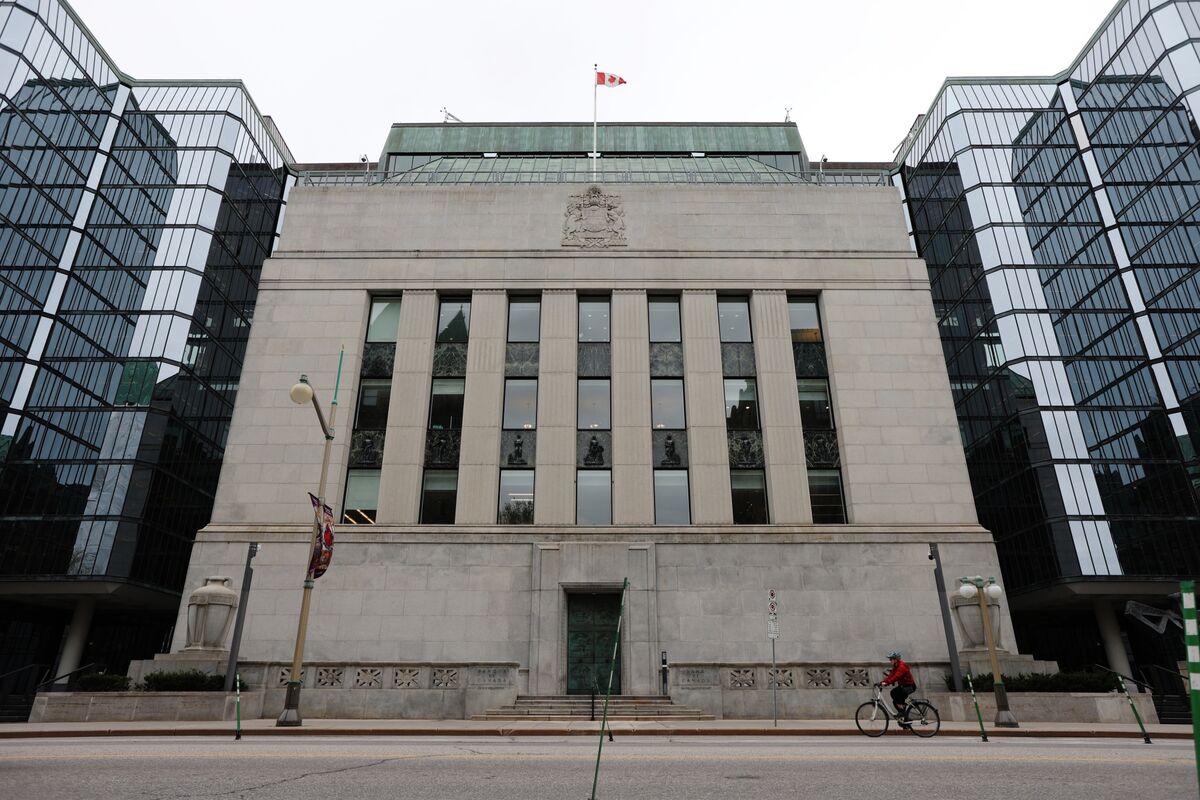
The Bank of Canada convened an urgent meeting with the country's major banks and financial institutions on Friday, April 10, 2026, to address emerging cybersecurity risks posed by Anthropic PBC's latest artificial intelligence model. The coordinated response marks a significant escalation in regulatory concerns about AI-powered threats to Canada's financial infrastructure.
Unprecedented Regulatory Response to AI Cybersecurity Threats
The Friday meeting represents the first time Canada's central bank has assembled the nation's financial leadership specifically to address AI-related cybersecurity concerns. Sources familiar with the discussions indicate that Anthropic's newest AI model has demonstrated capabilities that could potentially be exploited by malicious actors to enhance sophisticated cyber attacks against banking systems.
Major participants included representatives from the Royal Bank of Canada, Toronto-Dominion Bank, Bank of Nova Scotia, Bank of Montreal, and Canadian Imperial Bank of Commerce, along with senior officials from the Office of the Superintendent of Financial Institutions (OSFI). The meeting's urgency suggests that regulators have identified specific vulnerabilities or threat vectors that require immediate industry-wide coordination.
"This type of proactive engagement between the central bank and private institutions is unprecedented in the AI era," noted cybersecurity expert Dr. Sarah Chen, who has advised financial institutions on emerging technology risks. "It signals that we're entering a new phase of AI-related threats that require coordinated defensive strategies."
The timing of the meeting, just one day after reports emerged about potential security implications of Anthropic's latest model, underscores the rapid pace at which AI developments can create systemic risks for the financial sector. Industry sources suggest that the model's advanced reasoning capabilities, while beneficial for legitimate applications, could enable more sophisticated social engineering attacks and automated penetration testing.
Anthropic AI Model Raises New Cybersecurity Concerns
Anthropic PBC, founded by former OpenAI researchers Dario and Daniela Amodei, has been at the forefront of developing large language models with enhanced safety features. However, their latest release appears to have triggered specific concerns within Canada's financial regulatory community about potential misuse scenarios.
The AI model in question reportedly demonstrates advanced capabilities in code generation, system analysis, and strategic reasoning that could be weaponized by cybercriminals. Financial institutions are particularly vulnerable to AI-enhanced attacks because they rely heavily on complex digital infrastructure and process vast amounts of sensitive customer data.
Key areas of concern identified by security researchers include the model's ability to:
- Generate sophisticated phishing campaigns tailored to specific financial institutions
- Analyze publicly available information to identify potential system vulnerabilities
- Create convincing deepfake communications for social engineering attacks
- Automate the discovery of zero-day exploits in financial software
"The intersection of advanced AI capabilities with cybersecurity represents one of the most significant challenges facing the financial sector today," explained Mark Rodriguez, Chief Information Security Officer at a major Canadian bank who spoke on condition of anonymity. "These models can accelerate both attack and defense capabilities, but attackers often have the advantage of moving first."
The Canadian meeting follows similar discussions at central banks and financial regulators worldwide, including the Federal Reserve, European Central Bank, and Bank of England, all of whom have been grappling with the implications of rapidly advancing AI technology for financial stability.
Industry-Wide Coordination on AI Risk Management
The Bank of Canada's decision to convene this meeting reflects a broader shift toward proactive risk management in the face of emerging AI threats. Rather than waiting for actual incidents to occur, Canadian financial authorities are taking a preventive approach that emphasizes information sharing and coordinated defense strategies.
Participants in the Friday meeting reportedly discussed several key initiatives, including the establishment of an AI threat intelligence sharing network, joint investment in defensive AI technologies, and coordinated disclosure protocols for AI-related vulnerabilities. The collaborative approach recognizes that cybersecurity threats to one major financial institution can quickly spread throughout the interconnected banking system.
The meeting also addressed the challenge of keeping pace with AI development cycles. Traditional cybersecurity measures often require months or years to implement, while AI models can be developed, deployed, and potentially exploited within weeks. This timeline compression has forced financial institutions to rethink their approach to threat assessment and defense planning.
"We're moving from a reactive to a predictive security posture," noted Jennifer Walsh, a cybersecurity consultant who has worked with several major Canadian banks. "Financial institutions are now trying to anticipate how AI capabilities might be misused before those capabilities are even fully developed."
The coordinated response also reflects lessons learned from previous technology-related financial crises, where delayed or fragmented responses amplified systemic risks. By bringing together both regulators and industry leaders, the Bank of Canada is attempting to create a unified defense strategy that can adapt quickly to emerging AI threats.
Global Context: AI Cybersecurity in Financial Services
Canada's response to Anthropic AI cybersecurity risks must be understood within the broader global context of AI governance and financial regulation. Central banks worldwide have been increasingly concerned about the dual-use nature of advanced AI systems, which can enhance both legitimate business operations and malicious cyber activities.
The Financial Stability Board, which coordinates financial regulation among G20 countries, published updated guidance on AI risks in early 2026, emphasizing the need for "dynamic and adaptive regulatory frameworks" that can respond to rapidly evolving technology. The Canadian meeting appears to be implementing these recommendations in real-time.
Recent incidents in other jurisdictions have highlighted the potential scale of AI-enhanced cyber threats. In late 2025, financial institutions in several European countries reported sophisticated phishing campaigns that appeared to use advanced AI to create highly personalized and convincing fraudulent communications. While no major breaches occurred, the incidents demonstrated how AI could amplify traditional cyber attack methods.
The United States has taken a particularly aggressive approach to AI cybersecurity in financial services, with the Treasury Department establishing a dedicated AI Threat Assessment Unit in January 2026. This unit works closely with major banks to identify and mitigate AI-related risks before they can be exploited by malicious actors.
"What we're seeing globally is a recognition that AI represents a paradigm shift in cybersecurity," explained Dr. Michael Thompson, director of the Center for Financial Technology at McGill University. "Traditional defensive measures are becoming less effective against AI-powered attacks, which requires a fundamental rethinking of how we protect financial infrastructure."
The international dimension is particularly important given the global nature of both AI development and cybercrime. Threat actors can leverage AI models developed in one country to attack financial institutions in another, making international coordination essential for effective defense.
Expert Analysis: Implications for Financial Stability
The Bank of Canada's proactive approach to AI cybersecurity risks reflects growing recognition among financial regulators that artificial intelligence represents both an opportunity and an existential threat to banking stability. Industry experts emphasize that the meeting signals a new era of regulatory engagement with emerging technology risks.
"This meeting represents a watershed moment in financial regulation," stated Dr. Lisa Park, a former Bank of Canada official who now directs the AI Policy Institute at University of Toronto. "For the first time, we're seeing regulators and industry leaders acknowledge that AI development cycles are outpacing traditional risk management frameworks."
The implications extend beyond cybersecurity to broader questions of financial stability and systemic risk. Advanced AI models could potentially be used to manipulate financial markets, conduct high-frequency trading attacks, or exploit algorithmic trading systems in ways that human operators might not detect until significant damage has occurred.
"The systemic nature of AI risks requires systemic responses," noted cybersecurity researcher Dr. James Kumar. "Individual banks can't solve this problem alone – it requires coordination at the level we saw in Friday's meeting."
Experts also point to the meeting as evidence of Canada's emerging leadership in AI governance. By taking proactive measures to address AI cybersecurity risks, Canadian authorities may be establishing best practices that other countries will adopt as AI capabilities continue to advance.
What's Next: Monitoring AI Threats and Regulatory Evolution
The Bank of Canada meeting is likely just the beginning of ongoing efforts to address AI cybersecurity risks in the financial sector. Industry sources suggest that regular coordination meetings will become the norm, with financial institutions expected to share threat intelligence and defensive strategies on an ongoing basis.
Key developments to watch include the potential establishment of formal AI risk assessment protocols, mandatory disclosure requirements for AI-related vulnerabilities, and possible regulatory guidance on the use of AI systems within financial institutions themselves. The meeting may also lead to increased investment in defensive AI technologies and enhanced cybersecurity training programs.
The regulatory response will need to balance innovation with security, ensuring that legitimate AI applications in financial services can continue to develop while protecting against malicious use. This delicate balance will likely require ongoing dialogue between regulators, industry leaders, and AI developers.
As AI capabilities continue to advance rapidly, similar meetings and coordinated responses are expected to become standard practice across the global financial system, marking a new era of proactive technology risk management.
For more tech news, visit our news section.
Protecting Your Digital Health in the AI Era
As AI-powered cyber threats evolve, individuals must also adapt their digital security practices to protect personal financial and health data. The same AI capabilities that concern banking regulators can be used to target personal information, making cybersecurity hygiene more critical than ever for maintaining both financial wellness and peace of mind. Smart productivity tools and health platforms are implementing AI-powered security features to stay ahead of emerging threats. Join the Moccet waitlist to stay ahead of the curve.