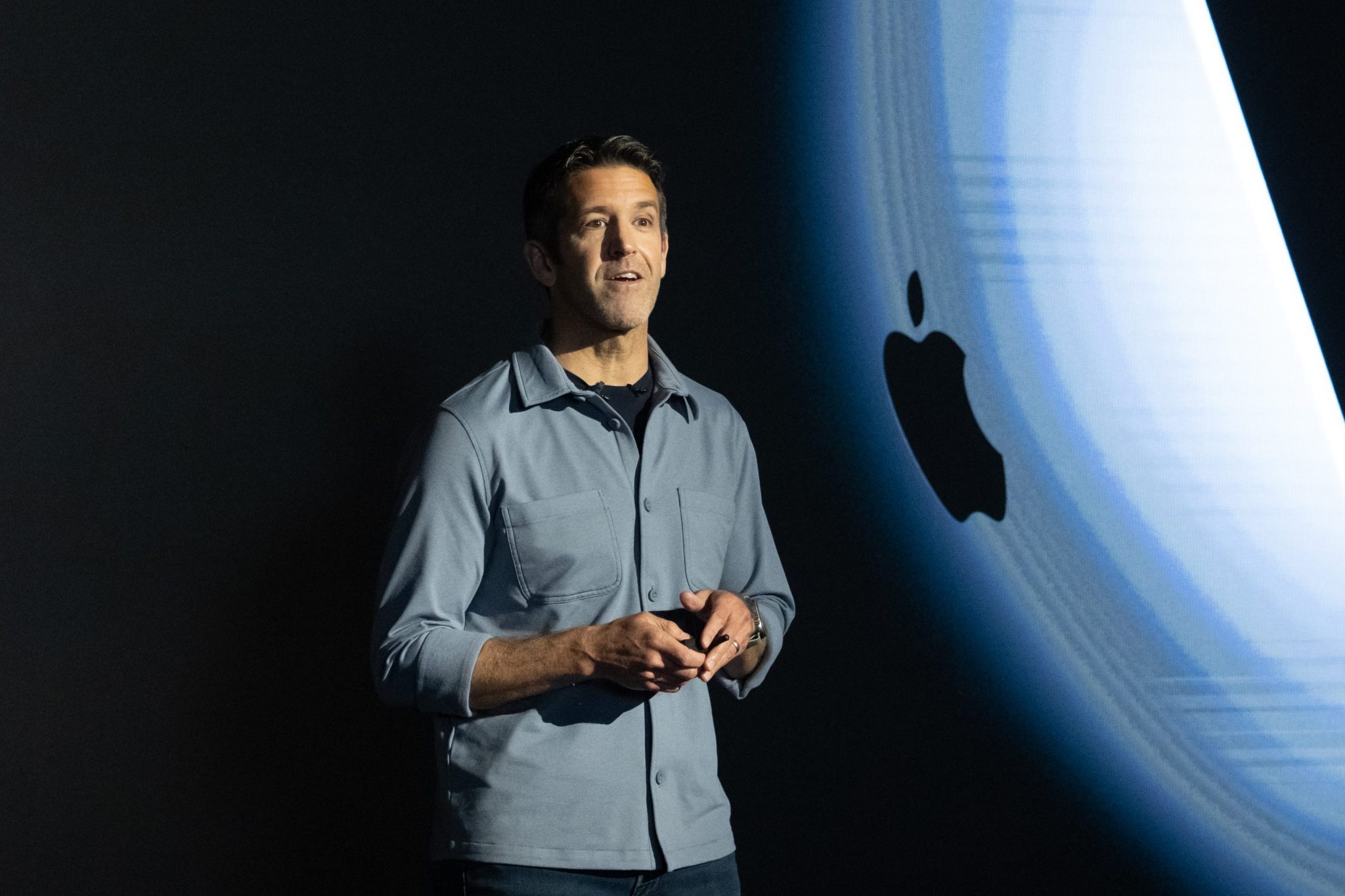
Apple CEO Tim Cook Steps Down: John Ternus Takes Helm in AI Era
Apple Inc. announced a historic leadership transition on April 20, 2026, with CEO Tim Cook stepping down after 15 transformative years at the helm and hardware engineering chief John Ternus being named as his successor. The carefully orchestrated succession, reportedly planned with Steve Jobs' input years ago, positions Apple to compete more aggressively in the rapidly evolving artificial intelligence landscape while maintaining the company's culture of innovation and operational excellence.
A Strategic Leadership Handoff Years in the Making
The transition from Tim Cook to John Ternus represents more than just a changing of the guard—it's a strategic pivot toward Apple's AI-first future. Cook's announcement, delivered during a company-wide meeting at Apple Park, emphasized that this succession has been in development for nearly a decade, following the methodical leadership development principles established by Steve Jobs.
"This isn't about me stepping back—it's about Apple stepping forward into its next chapter," Cook stated in his farewell message. "John has been instrumental in creating every major product breakthrough we've achieved over the past decade, from the M1 chip revolution to our latest AI capabilities."
Ternus, 49, has served as Apple's Senior Vice President of Hardware Engineering since 2013, overseeing the development of revolutionary products including the Apple Silicon transition, iPhone innovations, and most recently, the integration of advanced AI processing capabilities across Apple's ecosystem. His deep technical background and collaborative leadership style have earned him recognition as one of the most capable executives in Silicon Valley.
The timing of this transition is particularly strategic. As competitors like Google, Microsoft, and OpenAI continue to push boundaries in artificial intelligence, Apple needed a leader who could bridge the gap between hardware excellence and AI innovation. Ternus's track record of delivering complex technical projects on time and his understanding of how AI can enhance user experiences make him uniquely qualified for this role.
Market Response and Strategic Implications
Despite the magnitude of this leadership change, Apple's stock showed only modest volatility following the announcement, closing down just 1.2% on April 21, 2026. This muted market reaction reflects investor confidence in Apple's succession planning and Ternus's proven track record within the organization.
"The market's measured response actually validates Apple's approach," said Sarah Chen, senior technology analyst at Goldman Sachs. "Unlike other major tech companies that have experienced leadership chaos, Apple has demonstrated that their institutional knowledge and planning processes can ensure continuity even during major transitions."
Ternus's appointment signals Apple's commitment to hardware-software integration as a competitive advantage in the AI era. His engineering background positions him to make technical decisions that Cook, despite his operational brilliance, may not have been equipped to handle as AI becomes increasingly central to product development.
The new CEO's first strategic priority will be accelerating Apple's AI capabilities while maintaining the company's privacy-first philosophy. Industry insiders suggest that Ternus has been developing a comprehensive AI strategy that leverages on-device processing and Apple's custom silicon to deliver powerful AI features without compromising user privacy—a approach that could differentiate Apple from cloud-dependent competitors.
John Ternus: The Right Leader for Apple's AI Future
Ternus brings a unique combination of technical expertise and leadership experience that positions him perfectly for Apple's next phase. His career at Apple began in 2001 as a mechanical engineer, and he has been directly involved in the development of every major Apple product launch for the past two decades.
Under Ternus's hardware leadership, Apple achieved several breakthrough innovations that will prove crucial in the AI era. The M1, M2, and M3 chip families he helped develop include specialized neural processing units that enable sophisticated on-device AI computations. This hardware foundation gives Apple a significant advantage in delivering AI features that are both powerful and private.
"John understands that the future of AI isn't just about algorithms—it's about the seamless integration of hardware and software to create experiences that feel magical to users," explained former Apple executive Tony Fadell. "He's been preparing for this role by thinking holistically about how AI can enhance every aspect of the Apple ecosystem."
Ternus's leadership philosophy emphasizes cross-functional collaboration, a critical skill as AI development requires unprecedented coordination between hardware engineering, software development, and user experience design teams. His ability to communicate complex technical concepts clearly and build consensus among diverse stakeholder groups will be essential as Apple navigates the competitive AI landscape.
Industry Context: The AI Leadership Challenge
The timing of Apple's leadership transition coincides with a critical inflection point in the technology industry. As artificial intelligence capabilities become the primary differentiator among consumer technology companies, having a CEO who can make informed technical decisions becomes increasingly important.
Apple's competitors have taken different approaches to AI leadership. Google's Sundar Pichai brings deep AI expertise from his computer science background, while Microsoft's Satya Nadella has successfully positioned the company as an AI leader through strategic partnerships and acquisitions. Amazon's Andy Jassy has leveraged cloud computing infrastructure to support AI development across multiple business units.
What sets Ternus apart is his unique perspective on how AI can enhance consumer products without sacrificing the design principles and user experience standards that have made Apple successful. His hardware engineering background gives him insights into the physical limitations and possibilities of AI implementation that purely software-focused leaders might miss.
The AI revolution presents both opportunities and challenges for Apple. While the company has historically been a fast follower rather than a first mover in new technology categories, the stakes in AI are particularly high. Success in AI could reinforce Apple's premium market position and expand its ecosystem's value proposition. Failure could leave Apple vulnerable to competitors who better integrate AI capabilities into their products and services.
Ternus's appointment suggests Apple is taking a more aggressive approach to AI development while maintaining its commitment to user privacy and design excellence. His technical background positions him to make informed decisions about AI investments, partnerships, and product development strategies that will determine Apple's competitive position for years to come.
Expert Analysis: Continuity Meets Innovation
Technology industry experts are largely optimistic about Ternus's appointment, viewing it as a natural evolution of Apple's leadership development process rather than a disruptive change in direction.
"This transition represents the best of both worlds—continuity of Apple's core values and culture, combined with fresh technical leadership for the AI era," said Benedict Evans, independent technology analyst. "Ternus has been integral to Apple's most important technical achievements over the past decade, so he understands both the company's capabilities and its constraints."
The succession also reflects Apple's confidence in its institutional culture and processes. Unlike companies that experience significant disruption during leadership transitions, Apple's methodical approach to succession planning ensures that key strategic initiatives continue without interruption.
"Apple has always been about the intersection of technology and liberal arts, and Ternus embodies that philosophy," noted Gene Munster, managing partner at Deepwater Asset Management. "He has the technical depth to understand AI's potential and the design sensibility to implement it in ways that enhance rather than complicate the user experience."
What's Next: Apple's AI Strategy Under New Leadership
Ternus's first 100 days as CEO will likely focus on accelerating Apple's AI initiatives while reassuring investors, employees, and partners about continuity in the company's strategic direction. Industry observers expect him to provide more detailed insights into Apple's AI roadmap during the company's next earnings call and the anticipated WWDC 2026 developer conference.
Key areas to watch include Apple's approach to generative AI, potential partnerships or acquisitions in the AI space, and the integration of more sophisticated AI capabilities into existing products like Siri, iOS, and macOS. Ternus's technical background suggests Apple may take a more aggressive approach to AI hardware development, potentially including dedicated AI chips and enhanced neural processing capabilities.
The leadership transition also positions Apple to attract top AI talent who may have been hesitant to join a company perceived as lagging in AI innovation. Ternus's engineering credibility and vision for AI-enhanced products could help Apple compete more effectively for the specialized talent needed to execute ambitious AI projects.
For more tech news, visit our news section.
As Apple enters this new era of leadership, the implications extend far beyond the technology sector. The way Ternus navigates the balance between AI innovation and privacy protection could establish new industry standards for responsible AI development. His success or failure will influence how other consumer technology companies approach AI integration, making this leadership transition one of the most significant developments in the technology industry this year. The focus on hardware-software integration under technical leadership represents a broader shift toward engineering-led innovation in the AI era, where deep technical understanding becomes essential for competitive advantage. Join the Moccet waitlist to stay ahead of the curve and receive insights on how these technological shifts impact personal productivity and digital wellness.