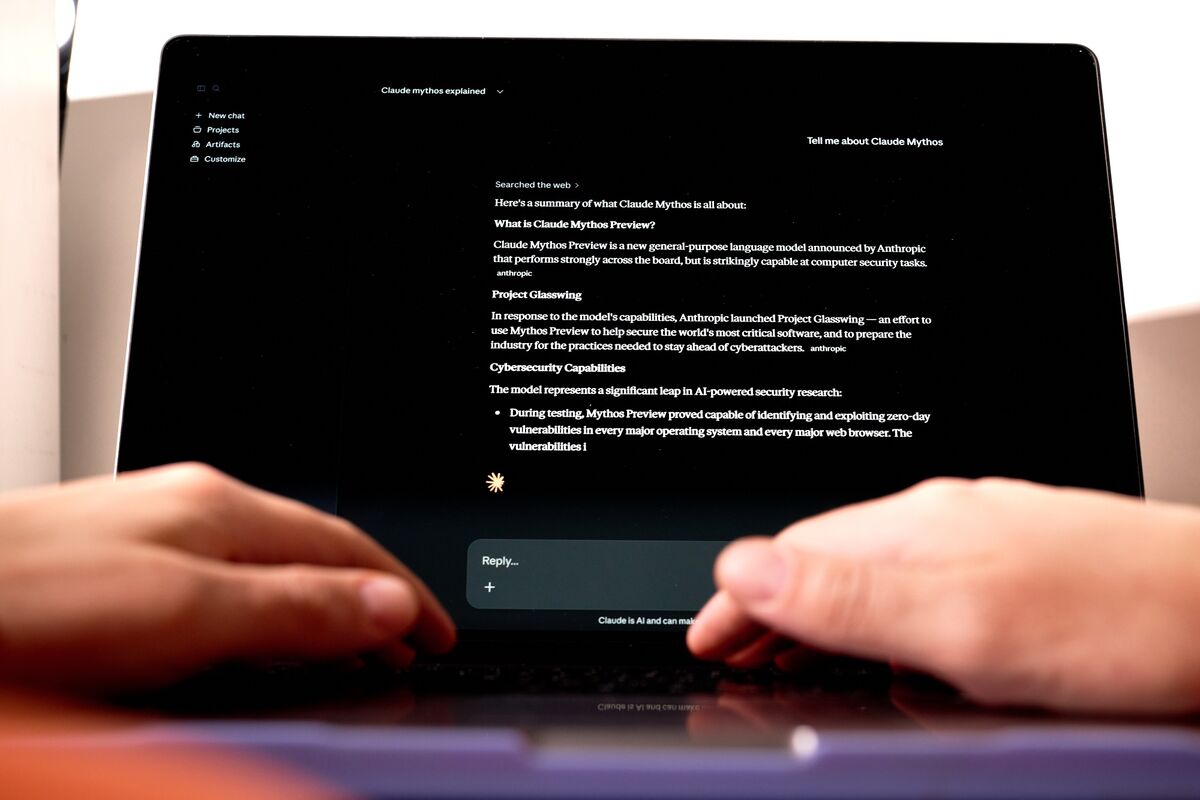
Anthropic Signs $1.8B Computing Deal With Akamai
Anthropic Inks $1.8 Billion Computing Deal With Akamai in Landmark AI Infrastructure Agreement
Anthropic PBC has signed a $1.8 billion, seven-year cloud computing deal with Akamai Technologies to meet surging demand for its Claude artificial intelligence software, according to Bloomberg, which cited people familiar with the matter speaking on condition of anonymity. The agreement, disclosed alongside Akamai's Q1 2026 earnings on May 8, 2026, is the largest contract in Akamai's nearly three-decade history and sent the company's stock soaring approximately 27% — its biggest single-day rally in more than 22 years.
Akamai did not publicly name the customer in its earnings release, describing the counterparty only as a "leading U.S.-based frontier model provider" that had committed to $1.8 billion over seven years for Cloud Infrastructure Services. Both Anthropic and Akamai declined to comment on Bloomberg's identification of Anthropic as that customer. The deal underscores how rapidly the demand for AI compute is reshaping the infrastructure strategies of technology companies well beyond the traditional hyperscalers.
What the Deal Covers — and What It Means for Akamai
At approximately $257 million per year on average, the Anthropic contract would more than double Akamai's current Cloud Infrastructure Services annual run rate. In Q1 2026, Akamai's Cloud Infrastructure Services segment generated $95 million in revenue — a figure that itself represented 40% year-over-year growth. Akamai's total Q1 2026 revenue was $1.074 billion, up 6% year-over-year, with security revenue reaching $590 million, up 11%.
Revenue from the Anthropic contract is not expected to begin flowing immediately. According to The Next Web, the deal is projected to contribute approximately $20–$25 million in Q4 2026, with the full ramp materializing over subsequent years. Akamai's full-year 2026 revenue guidance has a midpoint of $4.5 billion; at its full annual run rate, the Anthropic contract alone would represent close to 6% of that total.
Akamai CEO Tom Leighton addressed the deal directly in the company's earnings press release, stating: "a leading frontier model provider has committed to $1.8 billion over seven years for CIS, further validating our position as a key infrastructure provider in the AI economy." On the broader Q1 performance, Leighton added: "Akamai delivered a strong start to 2026, highlighted by a 40% year-over-year increase in Cloud Infrastructure Services revenue and security growth of 11%."
Akamai's Adjusted EPS for Q1 2026 came in at $1.61, down 5% year-over-year but narrowly beating the analyst consensus of $1.60, according to Investing.com and Akamai's 8-K filing.

Anthropic's Compute Spending Spree — and the Demand Behind It
The Akamai deal is one of several major infrastructure commitments Anthropic has made in 2026 as it races to keep pace with explosive user growth. At the "Code with Claude" developer conference in San Francisco, Anthropic CEO Dario Amodei disclosed that the company experienced 80x growth in annualized revenue and usage in Q1 2026 and is "working as quickly as possible" to secure more computing resources, according to Bloomberg and Benzinga.
To meet that demand, Anthropic has assembled a broad portfolio of compute suppliers. In addition to Akamai, the company has tapped Alphabet's Google and SpaceX for chips and cloud services, and also holds commitments with AWS, CoreWeave, Nvidia, and Broadcom, according to Bloomberg, Reuters, and Yahoo Finance. Among the most notable of those arrangements is a deal with SpaceX to access all available compute capacity at the Colossus 1 data center in Memphis — a facility that includes more than 220,000 Nvidia GPUs and over 300 megawatts of capacity, per Yahoo Finance.
The strategy of spreading committed spend across at least seven distinct providers reflects both the scale of Anthropic's compute needs and the practical limits of any single vendor's available capacity at this stage of AI infrastructure buildout.
Akamai's Cloud Pivot: From CDN to AI Infrastructure
For Akamai, the Anthropic deal is the most visible milestone yet in a multi-year strategic pivot away from its legacy content delivery network (CDN) business toward cloud computing and AI infrastructure. The company accelerated that shift with its $900 million acquisition of Linode in 2022, which gave it a managed cloud platform to compete with hyperscalers on distributed infrastructure.
More recently, Akamai has invested in AI-specific capabilities. In March 2025, the company launched Akamai Cloud Inference, and in October 2025 expanded its offering with Akamai Inference Cloud, built on Nvidia RTX PRO 6000 Blackwell servers and BlueField-3 data processing units, according to Forbes and Yahoo Finance.
What distinguishes Akamai's infrastructure pitch from traditional cloud providers is its geographic distribution. The company operates over 325,000 servers distributed across more than 1,000 cities worldwide, with points of presence in 4,300 locations across 700 cities in 130 countries. Leighton articulated the strategic logic in an interview with CNBC: "We operate the world's most distributed platform, and we have our infrastructure in 4,300 places, 700 cities in 130 countries, and we've used that for delivering content and for providing security to intercept all the attacks, and now we're using it to support AI."
The Anthropic contract also follows a separate $200 million, four-year cloud services agreement that Akamai signed in February 2026 with another unnamed U.S. technology company, per The Next Web — suggesting the company is building a pipeline of large AI-driven compute commitments rather than relying on a single anchor customer.
On the question of investor perception, Leighton was candid with CNBC: "I think we've been undervalued for a while, and investors have been looking for some real validation that our different approach is going to pay off, and now we're getting that validation, and we have a very strong pipeline of major enterprise customers, including some that have very large cloud needs."
What Analysts Are Watching
The financial market reaction was swift and significant. Akamai stock closed up approximately 27% on May 8, 2026 — a move reported by Yahoo Finance and The Boston Globe as the company's largest single-day stock rally in more than 22 years.
Raymond James analyst Frank Louthan offered a measured read on the revenue implications, noting: "We believe the $1.8B to be fully recognized as revenue over the life of the contract and assume it will produce better than normal EBITDA margins, but that will not be clear until next year when the revenue begins to ramp."
The margin profile of the deal remains a key open question. While Leighton's characterization of Akamai as a "key infrastructure provider in the AI economy" signals confidence in the company's positioning, the actual financial contribution of the Anthropic contract will not be meaningfully visible in reported results until 2027 and beyond, per the analyst's assessment.
Why This Deal Matters Beyond Akamai and Anthropic
The $1.8 billion Anthropic-Akamai agreement is notable not just for its size, but for what it signals about the evolving architecture of AI infrastructure. For years, AI compute demand has been assumed to flow almost entirely to a small number of hyperscale cloud providers — Amazon Web Services, Google Cloud, and Microsoft Azure. The Akamai deal suggests that frontier AI companies facing extreme demand growth are actively seeking distributed, non-hyperscale alternatives to diversify their supply chains and potentially reduce latency for inference workloads closer to end users.
Akamai's geographic footprint — built originally for CDN use cases — may offer structural advantages for distributed AI inference that centralized data centers cannot easily replicate. Whether that thesis holds at scale is a question the Anthropic partnership will help answer over the next several years.
For Anthropic, the deal is one piece of a larger infrastructure puzzle. The company's 80x growth figure, as reported by its CEO, suggests demand that is outpacing even aggressive capacity planning — making the diversified, multi-vendor approach less a strategic preference than a practical necessity.
For more tech news, visit our news section.
What Comes Next
The immediate financial impact of the Anthropic deal on Akamai's results will be modest in the near term. Revenue contributions are expected to begin at approximately $20–$25 million in Q4 2026, with the full ramp unfolding over the seven-year life of the contract. Akamai's full-year 2026 guidance — a midpoint of $4.5 billion — does not yet fully reflect the contract's contribution, and the margin profile will not be clear until revenue begins to ramp in earnest, per Raymond James analyst Frank Louthan.
For Anthropic, the focus remains on securing sufficient compute to meet demand that, by its CEO's own account, has dramatically exceeded internal projections. With commitments now spanning Google, AWS, SpaceX, CoreWeave, Nvidia, Broadcom, and Akamai, the company has assembled one of the most geographically and architecturally diverse compute supply chains in the AI industry. Whether that diversification strategy proves sufficient — or whether demand continues to outpace supply — will be a defining question for Anthropic's growth trajectory through the remainder of 2026 and into 2027.
AI infrastructure is reshaping not just how technology companies operate, but how individuals work and how organizations make decisions in real time. At Moccet, we track the technology shifts that matter most to your health and productivity — because understanding the tools being built today helps you make smarter decisions about how you work tomorrow. Join the Moccet waitlist to stay ahead of the curve.