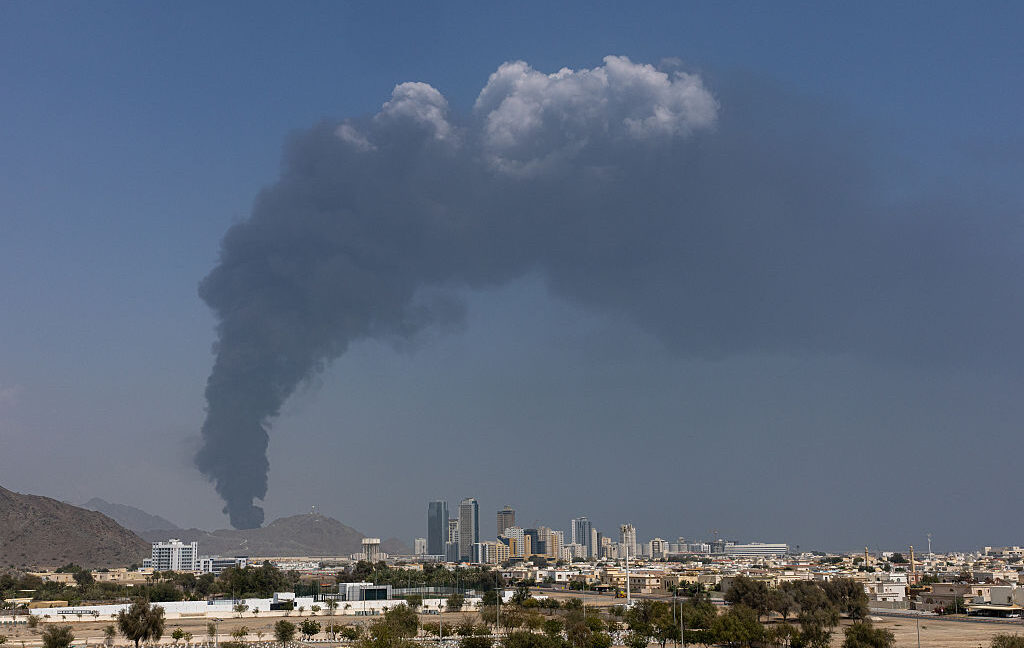
Amazon stuck with months of repairs after drone strikes on data centers
```json { "title": "AWS Drone Strike Damage: Months of Repairs in Middle East", "metaDescription": "AWS data centers in UAE and Bahrain remain disrupted two months after historic drone strikes. Amazon suspends billing as repairs stretch into mid-2026.", "content": "<h2>Amazon Suspends Billing as AWS Drone Strike Repairs Drag Into Mid-2026</h2><p>Two months after Iranian drone strikes hit three Amazon Web Services data centers across the Gulf region, dozens of cloud services in the UAE and Bahrain remain disrupted — and Amazon has confirmed that full restoration could take several more months. The company has suspended billing operations in both affected regions as it works to recover from what has been confirmed as the first verified military attack on a hyperscale cloud provider in recorded history.</p><h2>What Happened: The March 1 Drone Strikes on AWS Data Centers</h2><p>On March 1, 2026, drone strikes hit two AWS facilities in the United Arab Emirates — part of the ME-CENTRAL-1 cloud region — and caused additional damage to a facility in Bahrain, which operates under the ME-SOUTH-1 designation. According to CNBC, AWS confirmed that the UAE facilities were "directly struck" and that the Bahrain facility was taken offline after being damaged by a nearby strike.</p><p>The physical consequences were significant. According to the AWS Health Dashboard, as quoted by CBS News and Network World, the company confirmed: <em>"These strikes have caused structural damage, disrupted power delivery to our infrastructure, and in some cases required fire suppression activities that resulted in additional water damage."</em></p><p>The Register reported that fires triggered datacenter sprinklers in Bahrain, compounding equipment losses beyond the direct blast damage. Two of the three availability zones in AWS's ME-CENTRAL-1 UAE region were knocked offline, triggering outages across core services including EC2, S3, DynamoDB, Lambda, and RDS, according to Tom's Hardware. Data management firm Snowflake also attributed service disruptions in the region to the AWS UAE outage on that same day.</p><p>The Uptime Institute subsequently confirmed the events as the first verified military attack on a hyperscale cloud provider in recorded history — a milestone that has fundamentally shifted how the industry thinks about physical infrastructure risk.</p><h2>The Damage Is Proving Far More Persistent Than Expected</h2><p>As of the week of April 30, 2026, the AWS status page listed 37 services in the UAE region as disrupted, according to Dawn. Arab News reported that 31 services across Bahrain and the UAE combined remained affected — with several disrupted continuously since early March. Amazon confirmed to Arab News and Dawn that restoring cloud computing operations in both countries is expected to take several more months.</p><p>The situation has not been static. According to The Financial Times, as cited by The Conversation, an additional Iranian drone struck an Amazon data center in Bahrain on April 1, 2026 — a month after the initial attacks. Iranian state media, also cited by The Conversation, claimed that Iranian forces attacked an Oracle data center in Dubai on April 2, 2026, indicating the threat to regional cloud infrastructure extended beyond a single incident.</p><p>Iran's Islamic Revolutionary Guard Corps claimed, via Iranian state media, that Amazon's Bahrain data center was targeted because of the company's support of the U.S. military. Amazon declined to comment on the IRGC's claims, according to CNBC.</p><h2>Amazon Waives Billing and Works Around the Clock</h2><p>In a highly unusual step, Amazon waived all usage-related charges for its ME-CENTRAL-1 UAE region for the entire month of March 2026. The company notified affected customers by email, stating: <em>"AWS is waiving all usage-related charges in the ME-CENTRAL-1 Region for March 2026. This waiver applies automatically to your account(s), and no action is required from you."</em></p><p>According to The Register, the customer notification made no explicit mention of drone strikes or the extent of the damage. Amazon has since suspended billing operations in both affected regions while repairs continue, according to Arab News and Dawn reporting from April 30, 2026.</p><p>At the HumanX conference in San Francisco on April 7, AWS CEO Matt Garman addressed the crisis directly. "It's a really difficult situation, and we're working incredibly hard. In fact, we have teams, 24/7, working to make sure that we can keep our infrastructure up for our customers in that region," Garman said, according to CNBC.</p><p>Garman also framed the broader conflict in economic terms, describing it as "obviously hugely disruptive for the global economy" and a "drag on the global economy," according to CNBC. Despite the damage, he expressed continued optimism about the region's long-term commercial potential, saying: "There's a fantastic entrepreneurial spirit. There's a willingness to invest. And so our and my excitement about investing long term in that region is just as strong as it's ever been."</p><p>An AWS spokesperson confirmed in a statement cited by CNBC: <em>"AWS Bahrain Region has been disrupted as a result of the ongoing conflict."</em></p><h2>Why This Matters: The Broader Industry Implications</h2><p>The attacks have exposed a category of risk that the cloud industry had not previously confronted in a live operational context: the physical military targeting of commercial hyperscale infrastructure. According to The Register, there are roughly 326 data centers across the Middle East, with Google, Amazon, Microsoft, and Oracle all operating facilities in nations affected by Iranian bombardment. The geographic concentration of these assets — and their potential exposure to state-level military action — is now a live concern for cloud architects and enterprise risk managers worldwide.</p><p>The AWS Bahrain region (ME-SOUTH-1) was announced in 2019 and hosts significant government workloads in the country, according to CNBC. AWS's UAE operations were estimated to contribute $11 billion (AED 41 billion) to the national GDP between 2022 and 2036, according to MIT Sloan Management Review Middle East — figures that underscore how deeply embedded cloud infrastructure has become in Gulf economies, and how disruptive prolonged outages can be at a national scale.</p><p>The cascading effects have also illustrated the interconnected nature of cloud dependency. When two of AWS's three UAE availability zones went offline simultaneously, third-party platforms like Snowflake experienced knock-on disruptions — a reminder that a single region's outage can propagate across the ecosystem in ways that customers may not have planned for.</p><p>Mike Chapple, IT professor at the University of Notre Dame's Mendoza College of Business, offered important architectural context: <em>"Amazon has generally configured its services so that the loss of a single data center would be relatively unimportant to its operations."</em> However, the simultaneous loss of two of three availability zones in a single region goes beyond the standard failure scenario that most cloud resilience architectures are designed to absorb.</p><h2>What Comes Next</h2><p>As of May 1, 2026, Amazon has not provided a specific timeline for when full operations in ME-CENTRAL-1 or ME-SOUTH-1 will be restored, stating only that repairs are expected to take several more months. Billing remains suspended in both regions for the duration of the disruption.</p><p>The ongoing situation is likely to accelerate conversations across the enterprise technology sector about geographic redundancy strategies, multi-cloud architectures, and the adequacy of existing disaster recovery frameworks when the threat model includes deliberate military targeting rather than natural disasters or equipment failure. Enterprises with significant workloads in the Gulf region — particularly those relying solely on AWS Middle East infrastructure — face an extended period of uncertainty.</p><p>Whether other cloud providers operating in the region, including Google, Microsoft, and Oracle, face similar risks remains an open question. Iranian state media's reported claim of an attack on an Oracle facility in Dubai on April 2, 2026, suggests the targeting may not be limited to a single provider.</p><p>For cloud customers in the region and globally, the AWS Middle East outage has made one thing clear: infrastructure resilience planning must now account for scenarios that were, until March 1, 2026, largely theoretical.</p><p>For more tech news, visit our <a href='/news'>news section</a>.</p>", "excerpt": "Two months after Iranian drone strikes hit three AWS data centers in the UAE and Bahrain on March 1, 2026, dozens of cloud services remain disrupted and Amazon has confirmed repairs will take several more months. The company has suspended billing in both affected regions in what has been confirmed as the first military attack on a hyperscale cloud provider in recorded history. AWS CEO Matt Garman says teams are working 24/7 to restore operations.", "keywords": ["AWS drone strikes", "Amazon data center damage", "AWS Middle East outage", "cloud infrastructure attack", "AWS ME-CENTRAL-1"], "slug": "aws-drone-strike-damage-months-of-repairs-middle-east" } ```