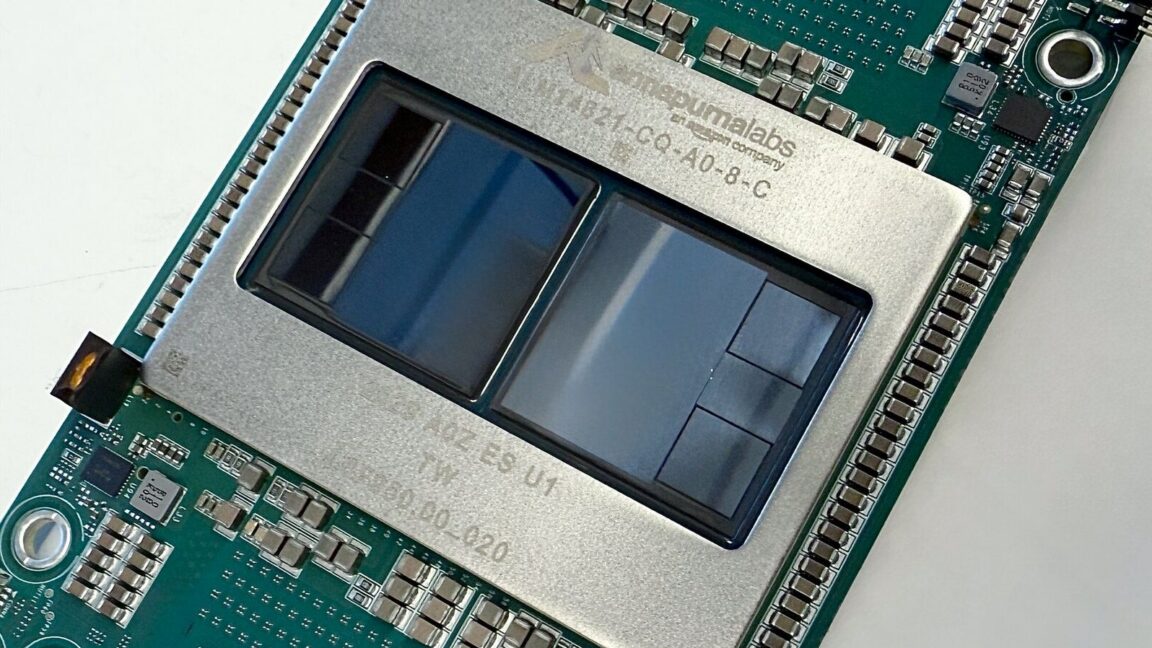
Amazon Invests $5B in Anthropic for Custom AI Chips
In a groundbreaking move that reshapes the artificial intelligence landscape, Amazon has invested $5 billion in Anthropic, the creator of Claude AI, with the funding specifically earmarked for purchasing Amazon's custom silicon chips. The deal, announced this week, secures 5 gigawatts of Amazon's proprietary processors for Anthropic as demand for Claude continues to surge across enterprise and consumer markets.
Strategic Partnership Deepens AI Infrastructure Alliance
This massive investment represents far more than a simple funding round—it's a strategic alliance that positions both companies at the forefront of the AI revolution. The $5 billion commitment from Amazon demonstrates the cloud giant's confidence in Anthropic's technology and its determination to compete directly with Microsoft-OpenAI and Google in the AI infrastructure space.
The focus on custom silicon procurement is particularly significant. Unlike traditional investments where funds might be used for research, hiring, or general operations, this arrangement creates a direct hardware dependency that ties Anthropic's scaling ambitions to Amazon's chip manufacturing capabilities. The 5 gigawatts of processing power secured through this deal represents enough computational capacity to support massive increases in Claude's user base and capabilities.
Industry analysts note that this hardware-focused approach reflects lessons learned from the GPU shortage that plagued AI companies throughout 2024 and early 2025. By securing dedicated silicon capacity, Anthropic ensures it won't be constrained by the supply bottlenecks that have limited competitors' growth. Amazon's custom chips, designed specifically for AI workloads, offer performance optimizations that generic processors cannot match.
The timing of this investment coincides with Anthropic's reported surge in enterprise adoption. Claude's advanced reasoning capabilities and safety features have made it increasingly popular among businesses seeking AI solutions for complex problem-solving tasks. This demand growth has created computational requirements that necessitate the kind of massive infrastructure investment this Amazon partnership provides.
Custom Silicon Revolution Transforms AI Computing
The emphasis on Amazon's custom silicon chips highlights a fundamental shift occurring across the AI industry. Traditional processors, even high-end GPUs, are increasingly inadequate for the computational demands of large language models and advanced AI systems. Companies are turning to specialized hardware designed specifically for AI workloads, with Amazon emerging as a major player in this space.
Amazon's custom silicon represents years of research and development investment, optimized for the specific mathematical operations that power modern AI systems. These chips offer several advantages over conventional processors: higher throughput for AI-specific calculations, better energy efficiency, and lower costs at scale. For Anthropic, accessing 5 gigawatts of this specialized computing power provides a significant competitive advantage in developing and deploying more sophisticated AI models.
The move also reflects broader industry trends toward vertical integration in AI infrastructure. Rather than relying on third-party chip manufacturers, major cloud providers are developing their own silicon to optimize performance and control costs. Amazon joins Google, Apple, and other tech giants in recognizing that custom hardware is essential for AI leadership.
This hardware focus has immediate implications for Claude's capabilities. With access to Amazon's optimized processors, Anthropic can potentially reduce response times, handle more complex queries, and support larger model sizes than would be possible with standard hardware. These improvements translate directly into better user experiences and expanded use cases for Claude across various industries.
Market Implications and Competitive Dynamics
The Amazon-Anthropic partnership sends ripples throughout the AI ecosystem, particularly affecting the competitive dynamics between major tech companies. Microsoft's partnership with OpenAI now faces a formidable challenger in the form of Amazon's backing of Anthropic, while Google must contend with another well-funded competitor in the enterprise AI market.
For Amazon Web Services, this investment strengthens its position in the cloud AI services market. By ensuring Anthropic's success, Amazon creates a compelling alternative to Microsoft's Azure OpenAI services, potentially attracting customers who prefer Claude's approach to AI safety and reasoning. The exclusive access to Amazon's custom silicon also means that the most advanced versions of Claude will likely be available first or exclusively through AWS infrastructure.
The $5 billion investment scale demonstrates how seriously major tech companies are taking the AI competition. This represents one of the largest single investments in an AI company to date, signaling that the battle for AI supremacy will be fought not just with algorithms and data, but with massive capital commitments and infrastructure investments.
Enterprise customers are likely to be the biggest beneficiaries of this partnership. The combination of Claude's advanced capabilities with Amazon's global cloud infrastructure and custom silicon creates a powerful platform for businesses looking to implement AI solutions at scale. This could accelerate AI adoption across industries as companies gain access to more powerful and reliable AI tools.
Industry Context: The New AI Infrastructure Race
This investment reflects a broader transformation in how the tech industry approaches AI development and deployment. The era of AI research happening primarily in academic settings or small startups is giving way to an age of massive capital investments and infrastructure buildouts by tech giants. The $5 billion commitment to Anthropic represents the kind of resource allocation typically reserved for major acquisitions or multi-year research initiatives.
The focus on custom silicon also highlights growing concerns about AI infrastructure security and independence. By developing and controlling their own chip designs, companies like Amazon can ensure better security, optimize performance for their specific use cases, and reduce dependence on external suppliers. This trend toward silicon sovereignty is becoming increasingly important as AI capabilities become more central to business operations and national competitiveness.
The partnership also addresses one of the most significant challenges facing AI companies: the massive computational costs associated with training and running large language models. By securing dedicated hardware capacity, Anthropic can better predict and control its infrastructure costs, enabling more aggressive scaling and feature development. This financial predictability is crucial for a company looking to compete with well-funded rivals in the AI space.
Furthermore, this deal sets a precedent for how AI companies might structure future partnerships with cloud providers. Rather than traditional licensing or service agreements, we're seeing more integrated partnerships where hardware, software, and services are bundled together in comprehensive packages. This approach could become the standard model for AI infrastructure partnerships going forward.
Expert Analysis: Strategic Implications and Market Response
Technology analysts view Amazon's $5 billion investment in Anthropic as a calculated response to Microsoft's early lead in commercial AI applications through its OpenAI partnership. "This isn't just about funding—it's about creating an integrated AI stack that can compete directly with Microsoft's offerings," notes Sarah Chen, a senior analyst at TechMarket Research. "The focus on custom silicon gives Amazon a differentiation point that's difficult for competitors to replicate quickly."
The hardware-centric approach of this investment has drawn particular attention from industry observers. Unlike previous AI investments that primarily funded research and development, this deal creates tangible infrastructure capacity that immediately enhances Anthropic's capabilities. "We're seeing a shift from betting on potential to investing in proven performance," explains Dr. Michael Rodriguez, an AI infrastructure specialist. "Amazon is essentially buying Anthropic the computational power to compete at the highest levels."
Market reaction to the announcement has been overwhelmingly positive, with analysts noting that both companies benefit significantly from the arrangement. Amazon secures a major customer for its custom silicon while gaining a competitive AI platform, while Anthropic obtains the infrastructure necessary to scale Claude globally. This mutual benefit structure suggests the partnership will likely deepen over time, potentially leading to even closer integration between the companies' technologies and services.
What's Next: Future Implications and Key Developments to Watch
The Amazon-Anthropic partnership sets the stage for several important developments in the coming months. Industry observers will be watching closely to see how quickly Anthropic can deploy the additional computational capacity and whether this leads to significant improvements in Claude's capabilities. The first major test will likely come with the release of Claude's next major version, which should demonstrate the benefits of Amazon's custom silicon.
Competitive responses from Microsoft, Google, and other major players are also anticipated. The scale of Amazon's investment raises the stakes for AI infrastructure competition, potentially triggering similar massive investments or partnerships. Companies that fail to secure adequate computational resources may find themselves at a significant disadvantage in the rapidly evolving AI market.
Looking ahead, this partnership could serve as a model for future AI industry consolidation. Rather than outright acquisitions, we may see more strategic partnerships that combine funding, infrastructure, and technology in mutually beneficial arrangements. The success of the Amazon-Anthropic collaboration will likely influence how other major tech companies approach AI partnerships and investments.
For more tech news, visit our news section.
As AI continues to transform industries from healthcare to finance, the computational infrastructure powering these advances becomes increasingly critical to productivity and innovation. The Amazon-Anthropic partnership demonstrates how access to advanced AI capabilities can provide significant competitive advantages across all sectors. For professionals and organizations looking to stay ahead of technological disruption, understanding and preparing for AI integration is becoming essential. Join the Moccet waitlist to stay ahead of the curve with insights and tools designed to help you navigate and leverage the AI revolution for improved health and productivity outcomes.